What it is
Proposed law to protect minors from all violence
It is a members’ bill. Introduced by parliamentary groups, the Senate, regional governments or citizens. It was introduced on 8 October 2018. Introduced by: Grupo Parlamentario Confederal de Unidos Podemos-En Comú Podem-En Marea.
Official title: Private member's organic bill for the promotion of good treatment and the eradication of violence against childhood and adolescence.
Source: Congreso de los Diputados, file 122/000281· updated 11 Nov
Automatic summary, not yet reviewed
- The bill would protect the moral, physical, psychological and sexual integrity of everyone under 18 living in Spain, regardless of their administrative status, and would prevent and eradicate all forms of violence against them.
- It defines violence against children with an open list of forms: neglect, psychological and physical violence, corporal punishment, sexual violence, exploitation, torture, peer violence, harmful practices such as female genital mutilation, and violence in the media, on the internet and in institutions.
- It sets guiding principles such as the best interests of the child, equality and non-discrimination, and the right of minors to be heard in all proceedings that affect them.
- It bans all forms of violence against minors and requires professionals in regular contact with them, such as teachers and doctors, to report situations of violence; failing to do so could be a crime of omission.
- It would create a 24-hour helpline and an online case registry coordinated by the Ministry of Health, Consumer Affairs and Social Welfare, to avoid victims having to repeat their story and being victimized again.
- On sexual violence, the bill would remove the distinction between sexual assault and sexual abuse, and would suspend the statute of limitations for crimes against sexual freedom until the victim turns 30.
- It guarantees minor victims free, specialized legal aid, adapted courtrooms, support from an adult, and measures to avoid contact with the accused during the proceedings.
- It would require the Government to approve, within one year, a State Action Strategy with sector plans in education, health, social services, policing and justice, and to report to the Congress three years after the law takes effect.
Who it affects
- Children and teenagers living in Spain: They would be the ones protected by the law from all forms of violence, regardless of their administrative status.
- Families, mothers and fathers: They would receive support and programs on positive parenting and non-violent child-rearing.
- Professionals such as teachers, doctors and social workers: They would be required to report situations of violence against minors.
- Schools and protection institutions: They would have to apply protocols, train their staff and ensure staff have no sexual offense convictions.
- Minor victims: They would have the right to comprehensive care, financial aid, free legal assistance and reparation.
Words worth knowing
- Prescripción (statute of limitations)
- The maximum time allowed to report a crime and have it tried. Once the deadline passes, the offender can no longer be punished.
- Interés superior del menor (best interests of the child)
- The duty to make the child's well-being the top priority in any decision affecting a minor.
- Ley Orgánica (organic law)
- A type of Spanish law reserved for major matters, such as fundamental rights, which requires a special majority in the Congress to pass.
- Desinstitucionalización (deinstitutionalization)
- The process of moving a minor out of a center or residential facility back to a family setting or independent living.
- Determinación de la edad (age determination)
- The procedure used to decide whether an undocumented foreign person is a minor or an adult.
It summarizes the text as it was introduced. It is written by artificial intelligence and may contain mistakes: the official text is what counts. Read the official text · How we make summaries
Where it stands
How far did it get?
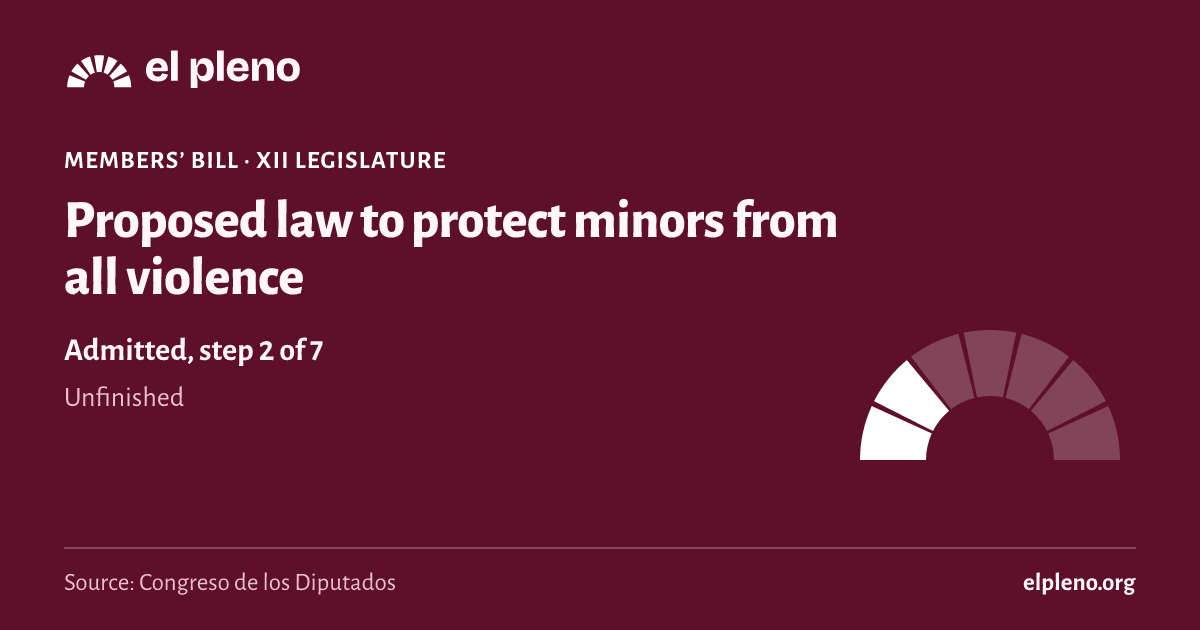
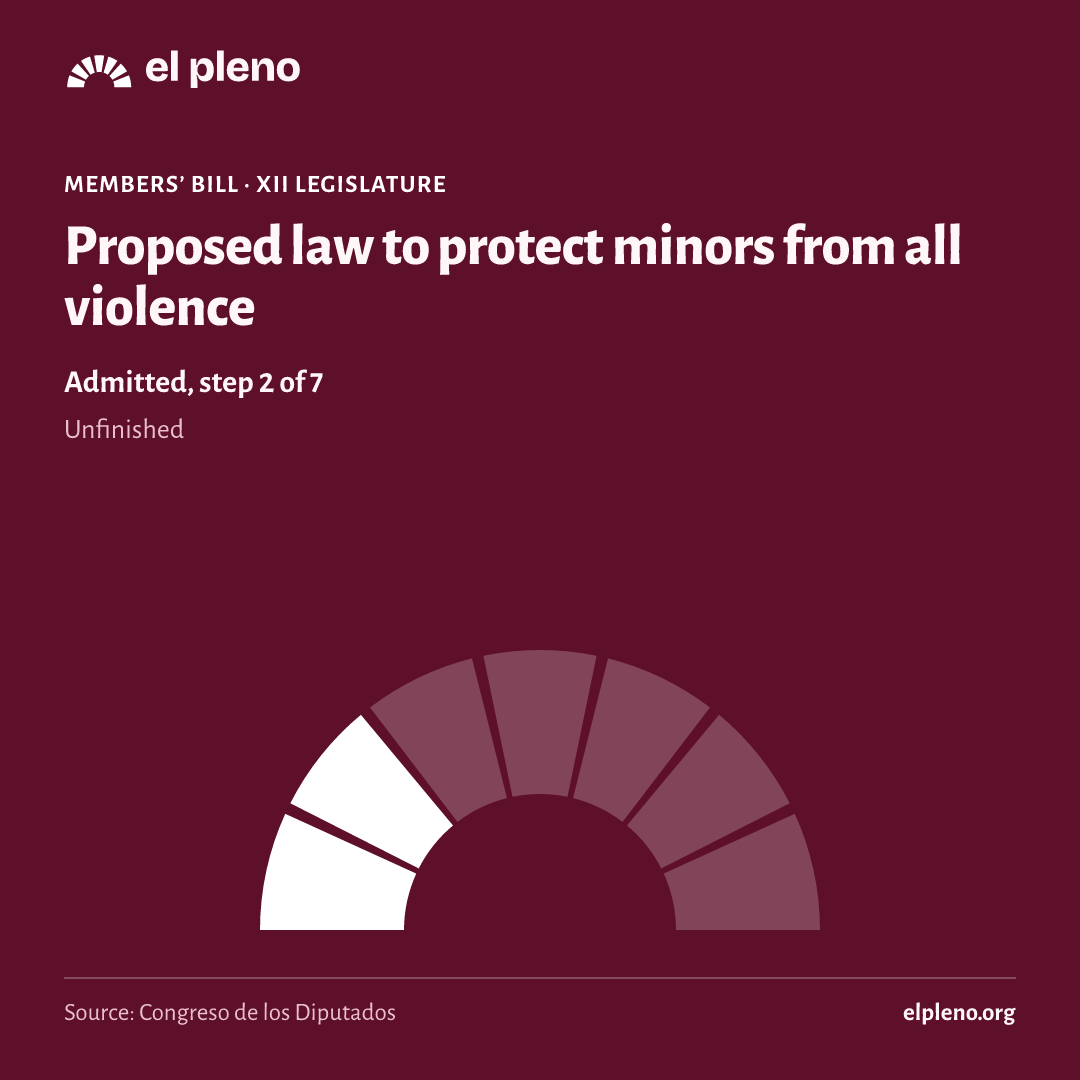
It took 2 of 7 steps. It reached Admitted, and today it is unfinished.
- Introduced8 October 2018Someone registers the text in the Congreso.
- Admitted16 October 2018The Bureau of the Congreso accepts it and, for a members’ bill, the plenary decides whether to consider it.
- Amendmentsnot reachedGroups propose changes.
- Committeenot reachedA committee goes through the text in detail.
- Plenarynot reachedAll 350 deputies vote.
- Senatenot reachedThe Senate can pass it, amend it or veto it.
- BOEnot reachedIt is published in the Official State Gazette (BOE) and comes into force.
See the 6 official steps on a timeline
Was there a plenary vote?
We have no plenary vote linked to this law in the Congreso’s data.
What happens next
What happens now?
The legislature ended before it finished. To go on, someone would have to introduce it again in the new Cortes.
It has not been presented again yet.
Sources
Where does all this come from?
- Congreso de los Diputados, file 122/000281
Official title, type, author, dates and stage.
Retrieved 11 November 2026
- The data comes from the open files of the Congreso, the Senate and the BOE, unaltered.
- Each deputy’s province is the one of their seat on the day of the vote.
- We only say “passed” or “rejected” when the majority needed is certain; otherwise we say which side had more votes.