What it is
Bill would punish spreading false cancer therapies
It is a members’ bill. Introduced by parliamentary groups, the Senate, regional governments or citizens. It was introduced on 26 July 2018. Introduced by: Grupo Parlamentario Ciudadanos.
Official title: Private member's organic bill to amend Organic Law 10/1995, of 23 November, the Penal Code, regarding the loss of opportunity for care by therapeutic methods not evaluated or authorized by the Spanish Agency for Medicines and Health Products among crimes against public health.
Source: Congreso de los Diputados, file 122/000266· updated 11 Nov
Automatic summary, not yet reviewed
- The bill would add a new paragraph to Article 362 of the Criminal Code. It would punish anyone who publicly spreads false or unverified information about therapies not evaluated or authorized by the Spanish Agency for Medicines, for cancer or other serious illnesses, if it leads patients to abandon treatments with proven effectiveness.
- The new crime would not require the patient to suffer actual harm. It is enough that the false information leads to abandoning an effective treatment, which is treated as a danger to public health.
- Patients who leave a treatment because of deception would not be punished. The crime targets those who spread the false information, not those who believe it.
- If approved, the law would take effect fifteen days after its publication in the Official State Gazette.
Who it affects
- People who publicly spread false or unscientific therapies for serious illnesses: They could face the same penalties as crimes involving the dispensing or shipping of medicines.
- Patients with cancer or other serious illnesses: They would be protected from deception that leads them to abandon effective treatments; they themselves would not be penalized.
- Public health as a collective interest: It is the legal interest protected by the new crime.
Words worth knowing
- Pérdida de oportunidad asistencial (loss of chance of care)
- A situation where, due to an error or deception, the patient loses the chance to receive a treatment that could have helped, even if it is unknown whether it would have cured them.
- Peligro abstracto (abstract danger)
- The crime is committed by putting health at risk, even if no actual harm ends up occurring.
- Lex artis
- The medical practices and standards accepted as correct by science and the healthcare profession.
- Proposición de Ley Orgánica (Organic Bill)
- A text proposing to change a law, submitted to Congress but not yet passed.
It summarizes the text as it was introduced. It is written by artificial intelligence and may contain mistakes: the official text is what counts. Read the official text · How we make summaries
Where it stands
How far did it get?
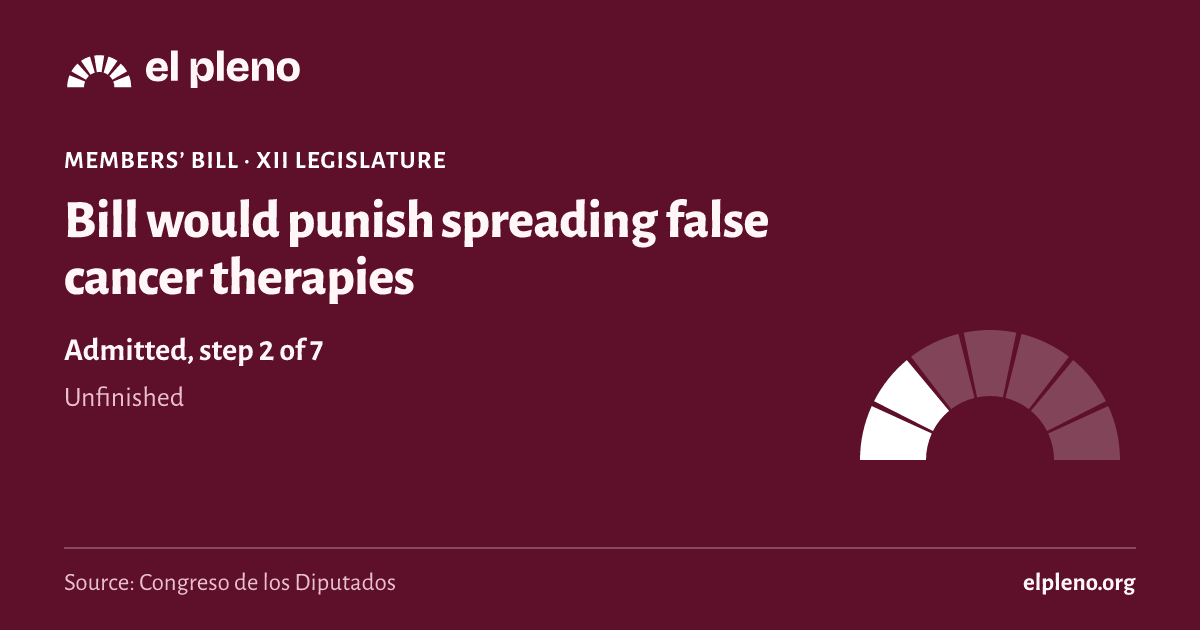
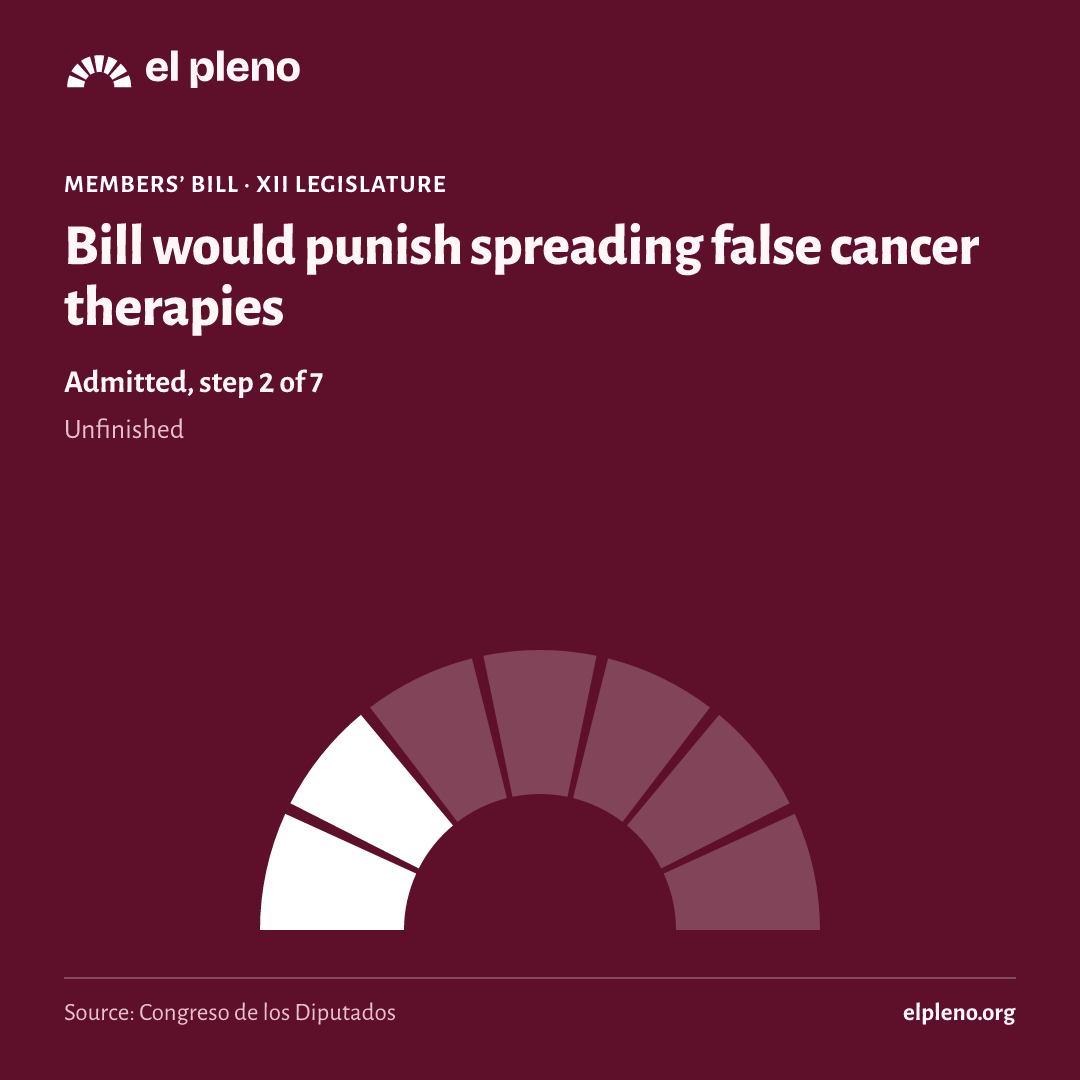
It took 2 of 7 steps. It reached Admitted, and today it is unfinished.
- Introduced26 July 2018Someone registers the text in the Congreso.
- Admitted4 September 2018The Bureau of the Congreso accepts it and, for a members’ bill, the plenary decides whether to consider it.
- Amendmentsnot reachedGroups propose changes.
- Committeenot reachedA committee goes through the text in detail.
- Plenarynot reachedAll 350 deputies vote.
- Senatenot reachedThe Senate can pass it, amend it or veto it.
- BOEnot reachedIt is published in the Official State Gazette (BOE) and comes into force.
See the 6 official steps on a timeline
Was there a plenary vote?
We have no plenary vote linked to this law in the Congreso’s data.
What happens next
What happens now?
The legislature ended before it finished. To go on, someone would have to introduce it again in the new Cortes.
It has not been presented again yet.
Sources
Where does all this come from?
- Congreso de los Diputados, file 122/000266
Official title, type, author, dates and stage.
Retrieved 11 November 2026
- The data comes from the open files of the Congreso, the Senate and the BOE, unaltered.
- Each deputy’s province is the one of their seat on the day of the vote.
- We only say “passed” or “rejected” when the majority needed is certain; otherwise we say which side had more votes.