What it is
Bill proposing guaranteed jobs, minimum income and basic rights against poverty
It is a members’ bill. Introduced by parliamentary groups, the Senate, regional governments or citizens. It was introduced on 5 July 2018. Introduced by: Grupo Parlamentario Confederal de Unidos Podemos-En Comú Podem-En Marea.
Official title: Private member's comprehensive bill against poverty and social exclusion.
Source: Congreso de los Diputados, file 122/000256· updated 11 Nov
Automatic summary, not yet reviewed
- The bill proposes a Guaranteed Work Plan: the State would directly create one million jobs with permanent contracts and an initial pay of 1,050 euros gross per month, in socially, ecologically and culturally useful activities.
- A Guaranteed Minimum Income would be created as an enforceable right for people without resources, managed by the autonomous communities and funded through the State's general budgets.
- The benefit for each child under care would rise to 1,200 euros a year, with higher amounts if there is a disability, and income limits would be expanded for single-parent and large families.
- Pensions would be updated every year according to the cost of living, and the sustainability factor, the mechanism that could cut future pensions based on life expectancy, would be removed.
- Public health care would be universal: registered foreigners or those with de facto residence in Spain, and Spanish citizens who emigrated, could receive care on equal terms, reversing the changes made by royal decree-law A rule with the force of law that the Government passes because it is urgent. It applies from its publication, but the Congreso must validate it within 30 days or it lapses. 16/2012.
- Minimum vital supplies of water, electricity and gas would be guaranteed for poor households, with a social price, limits on utility shutoffs for nonpayment and a Plan against energy poverty.
- On housing, evictions of insolvent mortgage holders or tenants would be suspended, a State Plan would end chronic homelessness within 10 years using the Housing First A program that gives a permanent home first to homeless people, with no prior conditions, and then supports their recovery. model, a plan would eradicate shantytowns in 5 years, and rental contracts would last at least five years with rent caps in stressed areas.
- In education, public places for children aged 0 to 3 would be created, school transport, materials and cafeteria would be free, and scholarships would reach 0.4 percent of GDP. It also includes specific plans for rural areas and a new cooperative agri-food model.
Who it affects
- People without a job or with very low income: They could access a guaranteed job paying 1,050 euros a month or the Guaranteed Minimum Income.
- Families with children in their care: They would receive a larger yearly benefit per child and free education-related aid.
- Pensioners: Their pensions would be updated every year and they would pay less or nothing in pharmacy copayments.
- Households struggling to pay water, gas or electricity: They would have minimum vital supplies guaranteed and protection against utility shutoffs.
- Homeless people, people in substandard housing, and those unable to pay a mortgage or rent: They would benefit from State housing plans and from the suspension of evictions in cases of insolvency.
Words worth knowing
- Proposición de ley
- A bill introduced by a parliamentary group so it can become law. Here it is only a proposal, not an approved law.
- Factor de sostenibilidad
- Sustainability factor: a mechanism that adjusts pensions based on life expectancy and can reduce their amount.
- Moratoria
- A mandatory pause or delay of a procedure, here of evictions.
- Housing First
- A program that gives a permanent home first to homeless people, with no prior conditions, and then supports their recovery.
- IPREM
- A public income indicator used in Spain as a reference amount to calculate benefits and aid.
- royal decree-law
- A rule with the force of law that the Government passes because it is urgent. It applies from its publication, but the Congreso must validate it within 30 days or it lapses.
- decree-law
- A rule with the force of law that the Government passes because it is urgent. It applies from its publication, but the Congreso must validate it within 30 days or it lapses.
It summarizes the text as it was introduced. It is written by artificial intelligence and may contain mistakes: the official text is what counts. Read the official text · How we make summaries
Where it stands
How far did it get?
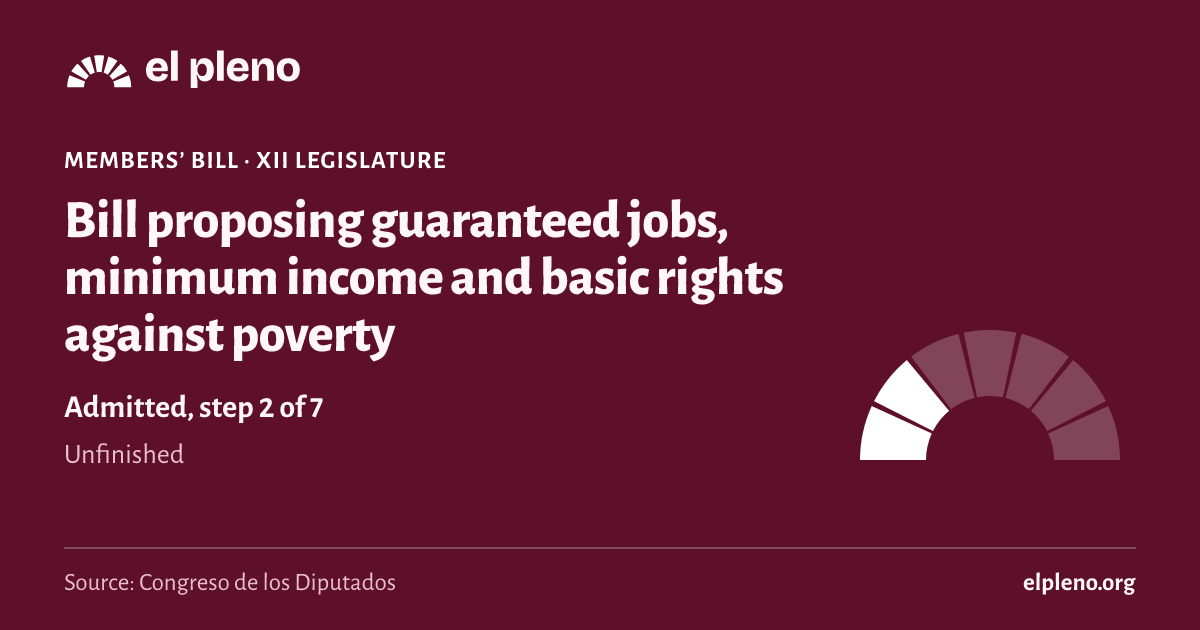
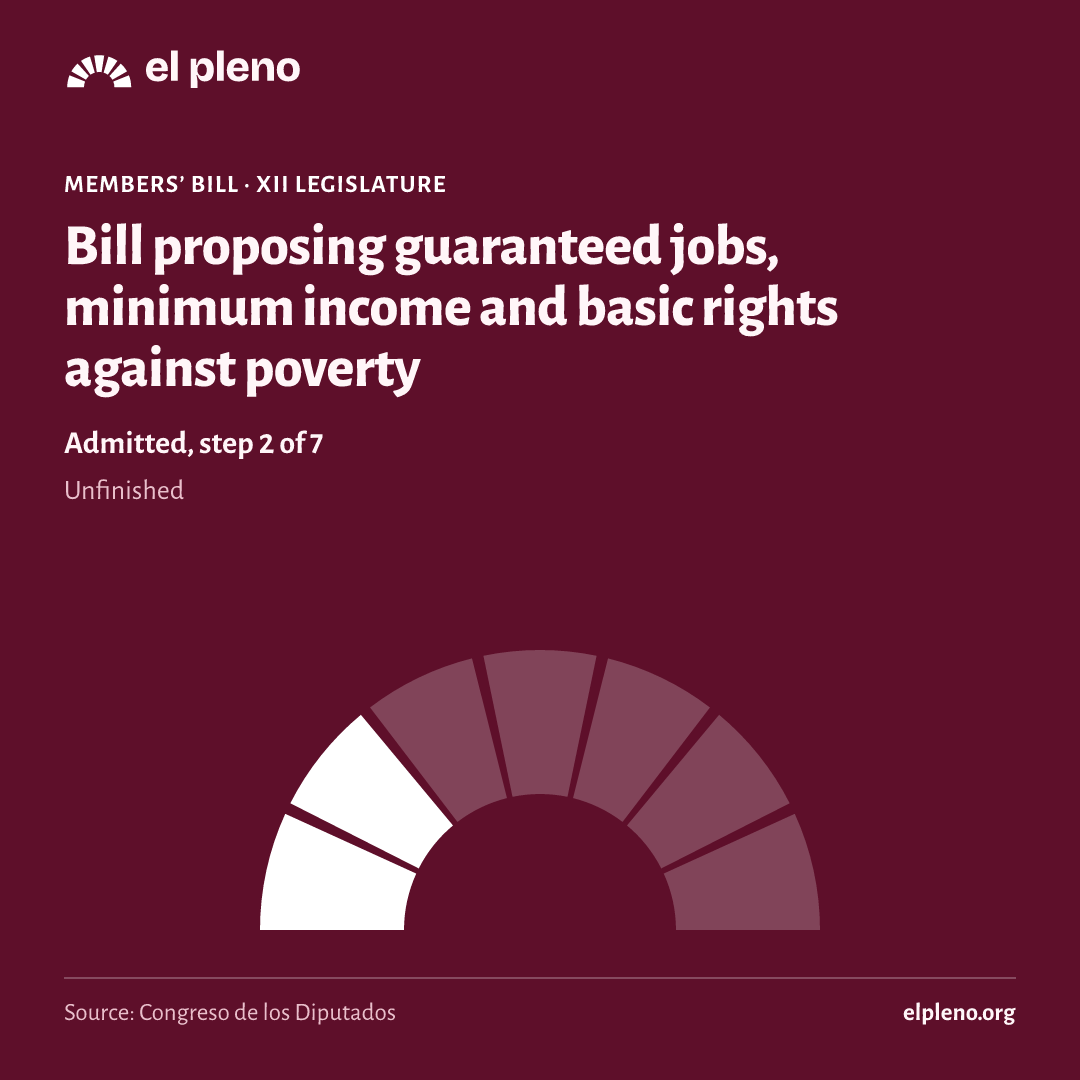
It took 2 of 7 steps. It reached Admitted, and today it is unfinished.
- Introduced5 July 2018Someone registers the text in the Congreso.
- Admitted10 July 2018The Bureau of the Congreso accepts it and, for a members’ bill, the plenary decides whether to consider it.
- Amendmentsnot reachedGroups propose changes.
- Committeenot reachedA committee goes through the text in detail.
- Plenarynot reachedAll 350 deputies vote.
- Senatenot reachedThe Senate can pass it, amend it or veto it.
- BOEnot reachedIt is published in the Official State Gazette (BOE) and comes into force.
See the 6 official steps on a timeline
Was there a plenary vote?
We have no plenary vote linked to this law in the Congreso’s data.
What happens next
What happens now?
The legislature ended before it finished. To go on, someone would have to introduce it again in the new Cortes.
It has not been presented again yet.
Sources
Where does all this come from?
- Congreso de los Diputados, file 122/000256
Official title, type, author, dates and stage.
Retrieved 11 November 2026
- The data comes from the open files of the Congreso, the Senate and the BOE, unaltered.
- Each deputy’s province is the one of their seat on the day of the vote.
- We only say “passed” or “rejected” when the majority needed is certain; otherwise we say which side had more votes.