What it is
Proposal to raise the child-rearing benefit
It is a members’ bill. Introduced by parliamentary groups, the Senate, regional governments or citizens. It was introduced on 29 June 2018. Introduced by: Grupo Parlamentario Mixto.
Official title: Private member's bill on improvements in the economic benefit of Social Security for child care.
Source: Congreso de los Diputados, file 122/000252· updated 11 Nov
Automatic summary, not yet reviewed
- The bill would rename the current child benefit, which would become the asignación económica para la crianza de los hijos o menores a cargo (economic allowance for raising children or minors).
- It would raise the allowance to €1,200 per year per child, and €1,800 per year in single-parent families. If the child has a disability, the annual amounts would be €4,123.71 (33% or more disability), €18,106.39 (over 18 with 65% or more) and €27,162.06 (over 18 with 75% or more who need another person's help).
- It would expand who can receive it: families could earn up to €22,000 per year, a limit that rises by 15% for each child from the second one on. Large families would have higher limits, and the limits would be updated each year in the State Budget Law. If income slightly exceeds the limit, a proportional part would be paid.
- For children with a disability, no income limit would apply.
- Management of the benefit would be transferred to the Autonomous Communities, as the authorities in charge of social services, to better respond to people in poverty.
- The Government would have to prepare, within 6 months, a report on the effects of creating a universal child-rearing benefit, and the law would take effect on January 1 of the year after its approval.
Who it affects
- Families with children under 18 in their care, who could receive more help with higher income limits.: They could receive an allowance of €1,200 per year per child, or €1,800 in single-parent families.
- Families with children with a disability.: They would receive higher amounts and, if the child has a disability, with no income limit.
- Large families.: They would have higher income limits to access the allowance.
- Autonomous Communities.: They would manage this benefit.
Words worth knowing
- Prestación no contributiva
- A benefit received for meeting certain requirements, without having previously paid into Social Security.
- Familia monoparental
- A family in which the child is in the care of a single parent.
- Familia numerosa
- A family with three or more children, under Law 40/2003.
- Acogimiento familiar permanente
- A situation in which a minor lives with a family other than their own on a stable basis, without being an adoption.
It summarizes the text as it was introduced. It is written by artificial intelligence and may contain mistakes: the official text is what counts. Read the official text · How we make summaries
Where it stands
How far did it get?
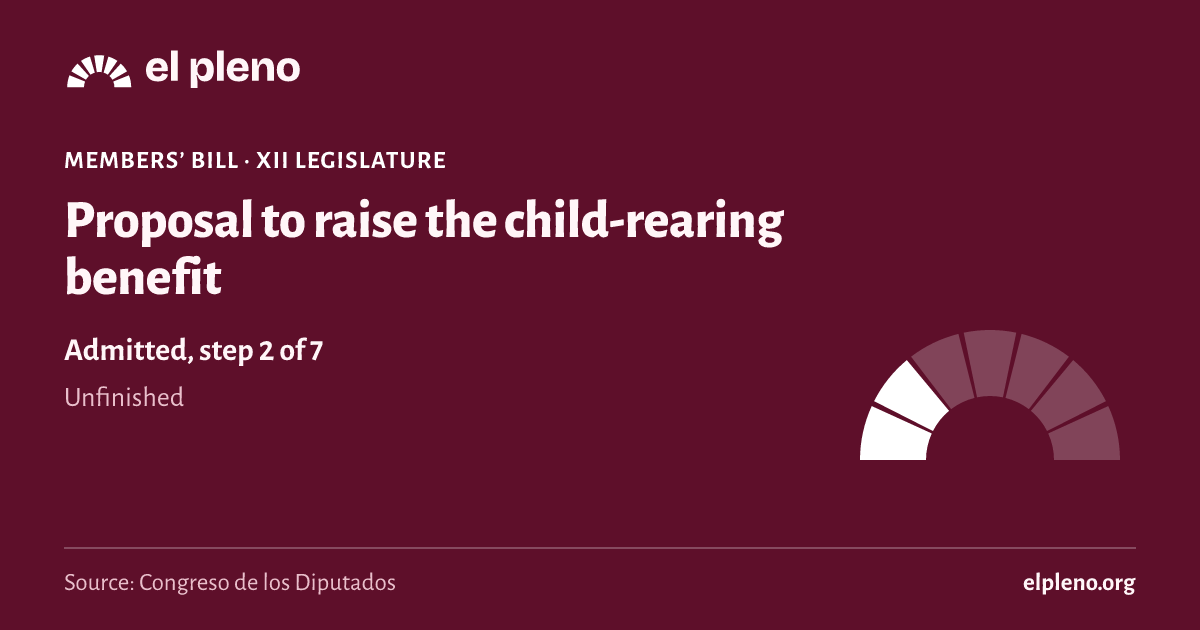
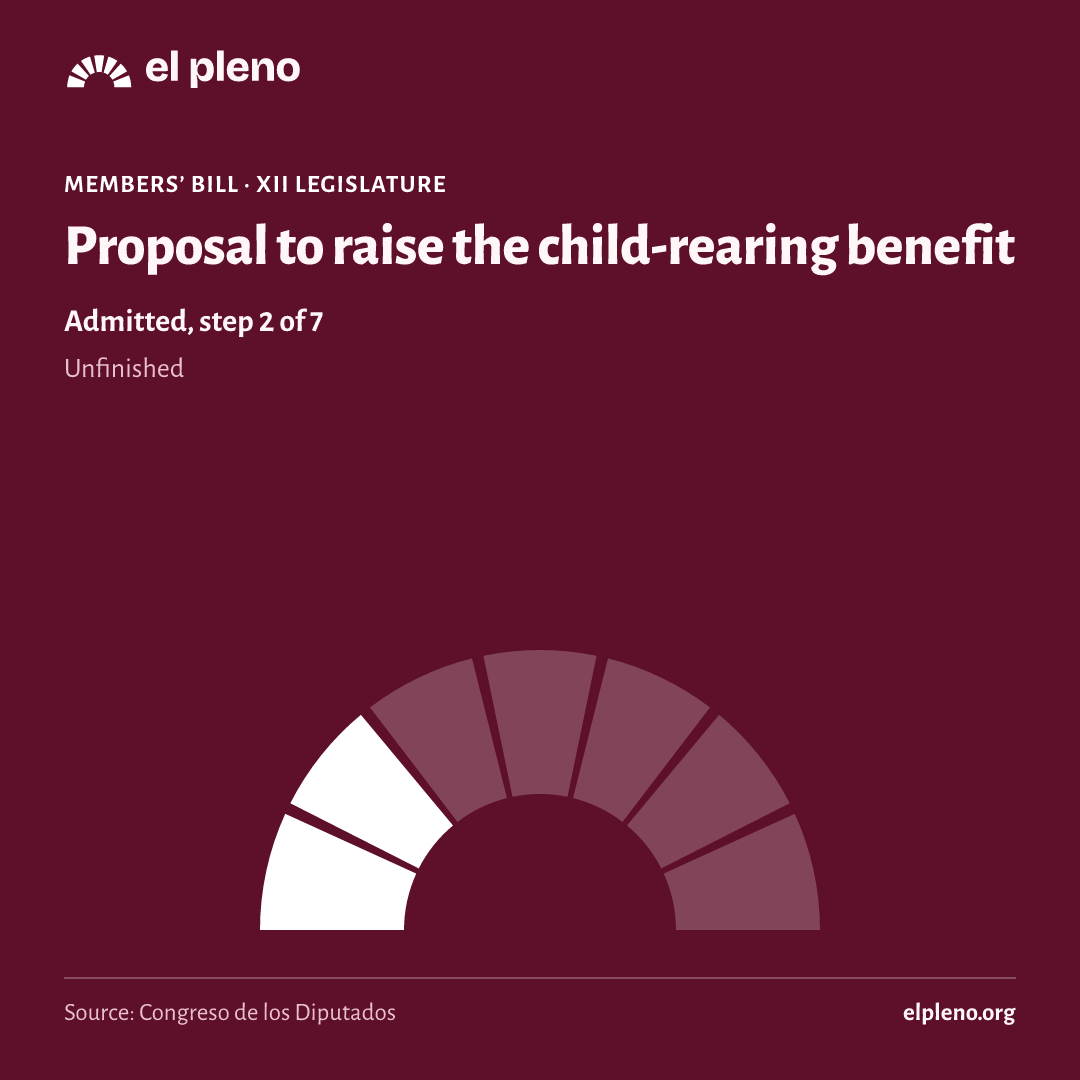
It took 2 of 7 steps. It reached Admitted, and today it is unfinished.
- Introduced29 June 2018Someone registers the text in the Congreso.
- Admitted10 July 2018The Bureau of the Congreso accepts it and, for a members’ bill, the plenary decides whether to consider it.
- Amendmentsnot reachedGroups propose changes.
- Committeenot reachedA committee goes through the text in detail.
- Plenarynot reachedAll 350 deputies vote.
- Senatenot reachedThe Senate can pass it, amend it or veto it.
- BOEnot reachedIt is published in the Official State Gazette (BOE) and comes into force.
See the 6 official steps on a timeline
Was there a plenary vote?
We have no plenary vote linked to this law in the Congreso’s data.
What happens next
What happens now?
The legislature ended before it finished. To go on, someone would have to introduce it again in the new Cortes.
It has not been presented again yet.
The same initiative in the other chamber:
- XII Legislature, Senate Private member's bill on improvements in the economic benefit of Social Security for child care.
Sources
Where does all this come from?
- Congreso de los Diputados, file 122/000252
Official title, type, author, dates and stage.
Retrieved 11 November 2026
- The data comes from the open files of the Congreso, the Senate and the BOE, unaltered.
- Each deputy’s province is the one of their seat on the day of the vote.
- We only say “passed” or “rejected” when the majority needed is certain; otherwise we say which side had more votes.