What it is
Bill to restore a tax credit for small firms that reinvest profits
It is a members’ bill. Introduced by parliamentary groups, the Senate, regional governments or citizens. It was introduced on 29 June 2018. Introduced by: Grupo Parlamentario Mixto.
Official title: Private member's bill to amend the Corporate Tax Act to stimulate the reinvestment of profits by small and medium-sized enterprises.
Source: Congreso de los Diputados, file 122/000251· updated 11 Nov
Automatic summary, not yet reviewed
- The proposal would bring back the tax credit for reinvested profits that the 2014 Corporate Tax reform removed, as an alternative to the current leveling reserve for taxable bases.
- The bill would create a 15 percent credit on the tax bill for profits reinvested in new tangible fixed assets (except land, natural assets and buildings) and in industrial property and software applications.
- Companies using the credit would have to set up an investment reserve equal to the credit base, keep the assets for at least 5 years, and disclose the details in the notes to their annual accounts. Missing any requirement means losing the credit.
- The law would take effect on January 1 of the year after its approval, so it would not affect budgets already in force.
Who it affects
- Small and medium-sized companies meeting the requirements of Article 101 of the Corporate Tax Law: They could credit 15 percent of profits they reinvest in new equipment, industrial property or software.
- Companies taxed under the fiscal consolidation regime: The investment and the reserve can be made by any entity in the tax group.
- Companies using the leveling reserve for taxable bases or incentives such as free depreciation: They cannot apply this credit, because it is incompatible with them.
Words worth knowing
- Cuota íntegra
- The tax amount obtained by applying the tax rate to profits, before applying any credits.
- Inmovilizado material
- Tangible fixed assets: long-lasting physical goods such as machinery, furniture or vehicles.
- Consolidación fiscal
- A regime where several companies in the same group are taxed together, as if they were one.
- Reserva indisponible
- Part of the profits a company must set aside and cannot distribute or use freely.
- Libertad de amortización
- A tax benefit that lets a company deduct the cost of an investment all at once instead of spreading it over years.
It summarizes the text as it was introduced. It is written by artificial intelligence and may contain mistakes: the official text is what counts. Read the official text · How we make summaries
Where it stands
How far did it get?
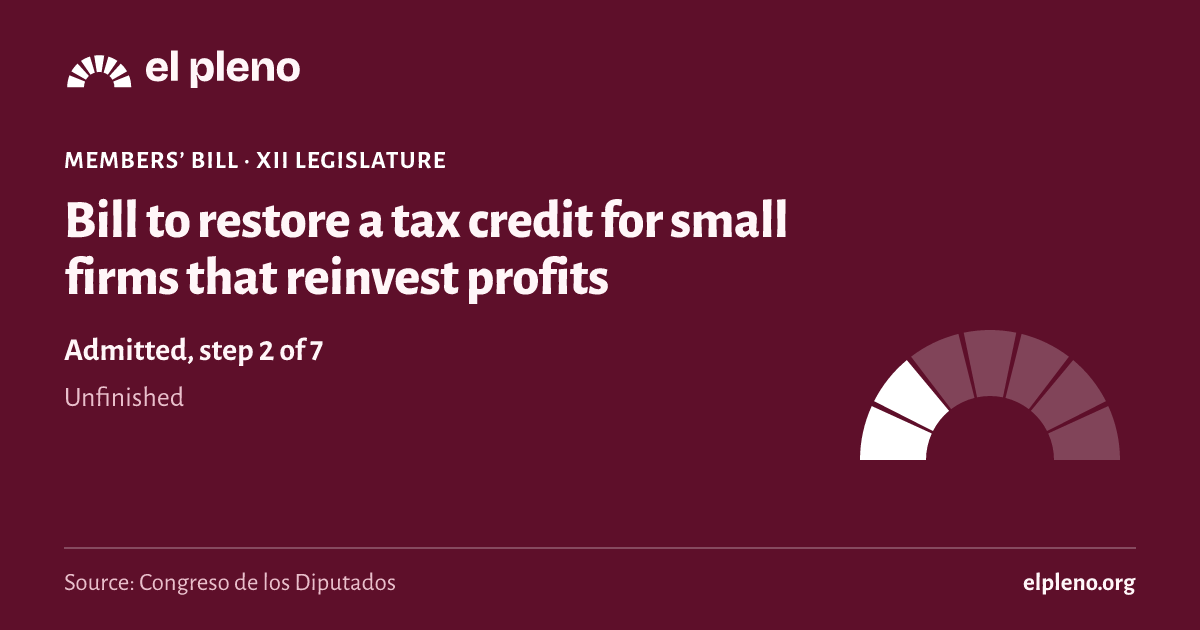
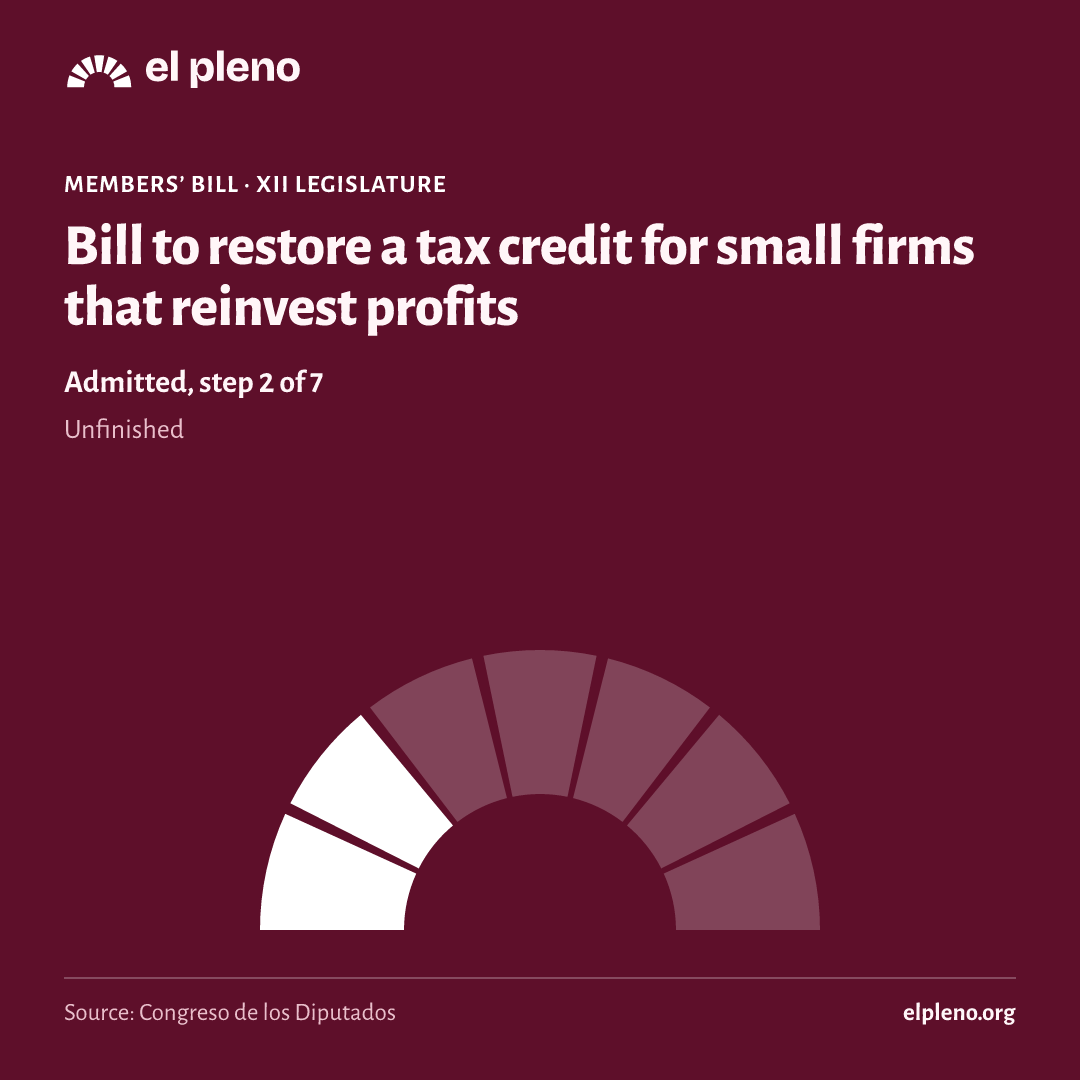
It took 2 of 7 steps. It reached Admitted, and today it is unfinished.
- Introduced29 June 2018Someone registers the text in the Congreso.
- Admitted10 July 2018The Bureau of the Congreso accepts it and, for a members’ bill, the plenary decides whether to consider it.
- Amendmentsnot reachedGroups propose changes.
- Committeenot reachedA committee goes through the text in detail.
- Plenarynot reachedAll 350 deputies vote.
- Senatenot reachedThe Senate can pass it, amend it or veto it.
- BOEnot reachedIt is published in the Official State Gazette (BOE) and comes into force.
See the 6 official steps on a timeline
Was there a plenary vote?
We have no plenary vote linked to this law in the Congreso’s data.
What happens next
What happens now?
The legislature ended before it finished. To go on, someone would have to introduce it again in the new Cortes.
It has not been presented again yet.
Sources
Where does all this come from?
- Congreso de los Diputados, file 122/000251
Official title, type, author, dates and stage.
Retrieved 11 November 2026
- The data comes from the open files of the Congreso, the Senate and the BOE, unaltered.
- Each deputy’s province is the one of their seat on the day of the vote.
- We only say “passed” or “rejected” when the majority needed is certain; otherwise we say which side had more votes.