What it is
Proposal to raise pensions with inflation and scrap the sustainability factor
It is a members’ bill. Introduced by parliamentary groups, the Senate, regional governments or citizens. It was introduced on 27 April 2018. Introduced by: Grupo Parlamentario Confederal de Unidos Podemos-En Comú Podem-En Marea.
Official title: Private member's bill on the revaluation of pensions and the repeal of the sustainability factor.
Source: Congreso de los Diputados, file 122/000233· updated 11 Nov
Automatic summary, not yet reviewed
- The bill would remove the sustainability factor from retirement pensions: it repeals the last paragraph of Article 210.1, Article 211 and additional provision 22 of the revised Social Security Act, plus the last paragraph of its final provision.
- It would restore the annual uprating of contributory pensions, including minimum ones, based on the forecast consumer price index, with a one-time payment of the difference if actual inflation is higher. Factors such as productivity and the general economy would also be considered.
- It would reform Social Security funding so that State contributions, permanently included in the General State Budgets, cover any deficit when contributions fall short, avoiding cuts to benefits.
- It would grant a one-time payment to pensioners affected by the 2013 uprating index, covering the difference between what they received and what they would have received under the CPI in 2016 and 2017.
- The explanatory statement argues that the sustainability factor and the 2013 uprating index reduce the purchasing power of pensions and also affect pensions already granted, and defends uprating as an essential part of the right to a pension.
- The law would take effect in the budgetary year following its publication in the Official State Gazette, and the Government would be authorized to issue the rules needed to apply it.
Who it affects
- Social Security pensioners: They would regain CPI-based annual uprating, and those hit by the 2013 reform would get a one-time payment for the 2016 and 2017 differences.
- People close to retirement age: The sustainability factor, which cut the initial pension, would no longer apply to them.
- Pensioners with minimum and non-contributory pensions: The new uprating index would also apply to them.
- The State: It would have to include permanent contributions in the General Budgets to cover Social Security deficits.
Words worth knowing
- Factor de sostenibilidad (sustainability factor)
- A mechanism that automatically adjusts the initial pension amount based on changes in life expectancy, reducing it as life expectancy rises.
- Revalorización (uprating)
- The annual increase of pensions to maintain their purchasing power against prices.
- IPC (CPI)
- Consumer price index: it measures how much the prices of everyday goods and services rise.
- Pensión no contributiva (non-contributory pension)
- A pension granted to people who have not contributed enough, due to disability or old age.
- Texto refundido (revised text)
- An organized version of a law that gathers all its amendments into a single text.
It summarizes the text as it was introduced. It is written by artificial intelligence and may contain mistakes: the official text is what counts. Read the official text · How we make summaries
Where it stands
How far did it get?
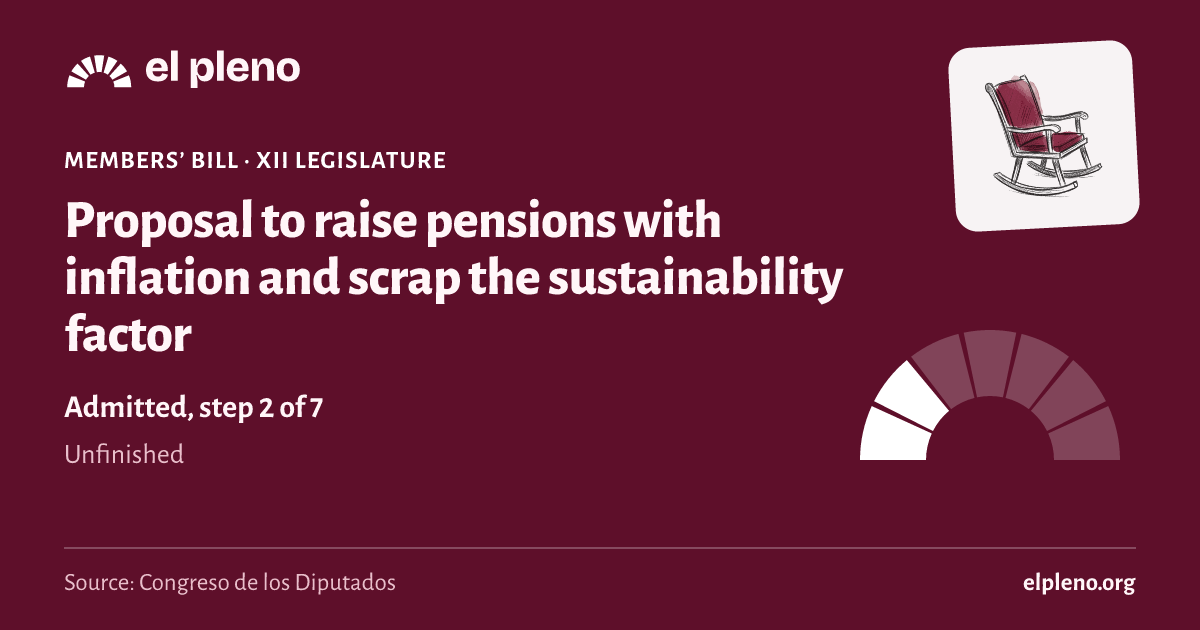
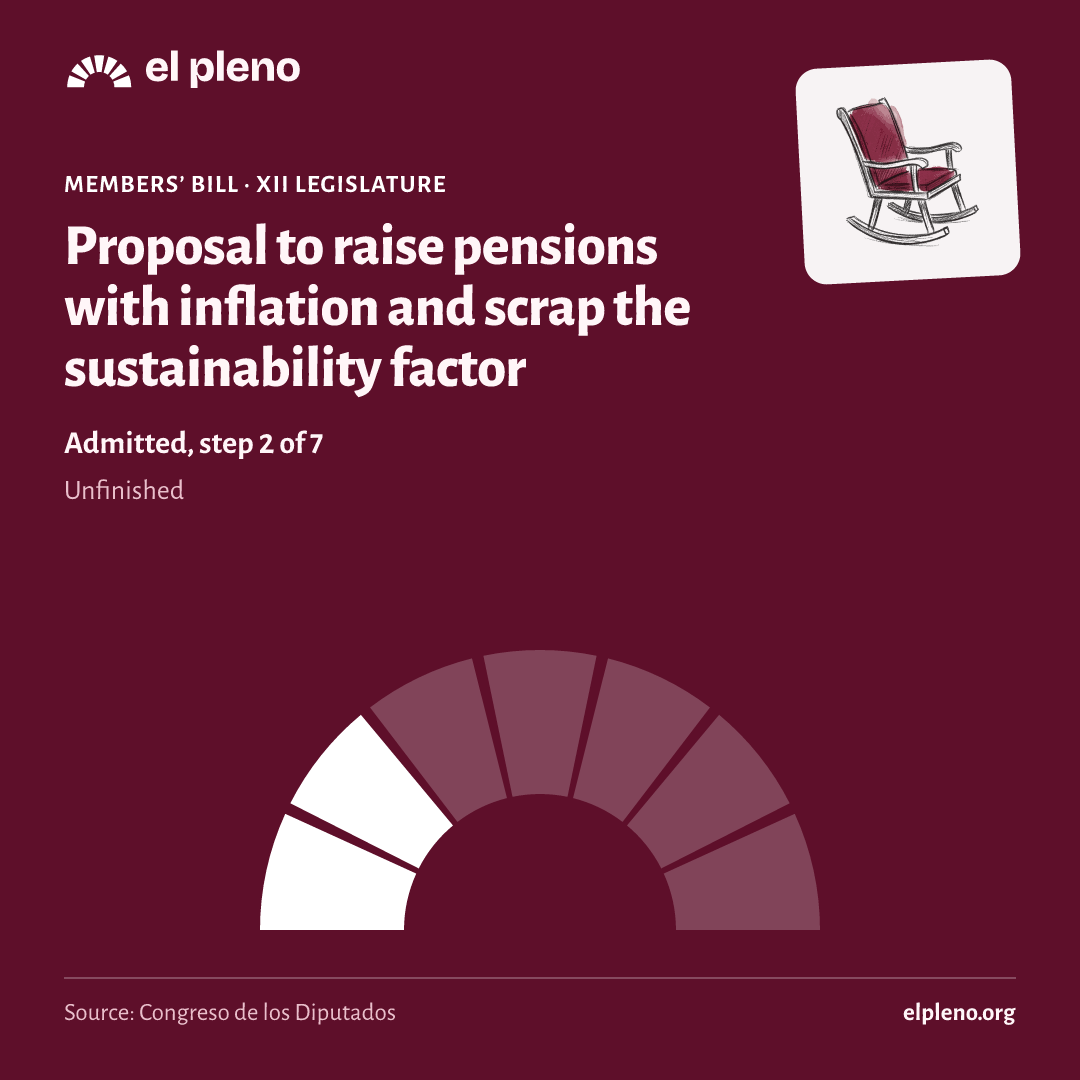
It took 2 of 7 steps. It reached Admitted, and today it is unfinished.
- Introduced27 April 2018Someone registers the text in the Congreso.
- Admitted3 May 2018The Bureau of the Congreso accepts it and, for a members’ bill, the plenary decides whether to consider it.
- Amendmentsnot reachedGroups propose changes.
- Committeenot reachedA committee goes through the text in detail.
- Plenarynot reachedAll 350 deputies vote.
- Senatenot reachedThe Senate can pass it, amend it or veto it.
- BOEnot reachedIt is published in the Official State Gazette (BOE) and comes into force.
See the 6 official steps on a timeline
Was there a plenary vote?
We have no plenary vote linked to this law in the Congreso’s data.
What happens next
What happens now?
The legislature ended before it finished. To go on, someone would have to introduce it again in the new Cortes.
It has not been presented again yet.
Sources
Where does all this come from?
- Congreso de los Diputados, file 122/000233
Official title, type, author, dates and stage.
Retrieved 11 November 2026
- The data comes from the open files of the Congreso, the Senate and the BOE, unaltered.
- Each deputy’s province is the one of their seat on the day of the vote.
- We only say “passed” or “rejected” when the majority needed is certain; otherwise we say which side had more votes.