What it is
Bill to curb abusive rents and strengthen tenant protections
It is a members’ bill. Introduced by parliamentary groups, the Senate, regional governments or citizens. It was introduced on 5 April 2018. Introduced by: Grupo Parlamentario Confederal de Unidos Podemos-En Comú Podem-En Marea.
Official title: Private member's bill to regulate abusive rents and improve guarantees and access to rental housing.
Source: Congreso de los Diputados, file 122/000217· updated 11 Nov
Automatic summary, not yet reviewed
- The bill would restore mandatory lease renewals up to a minimum of five years, instead of the current three. If the landlord is a company, the lease could extend up to ten years unless there is a justified reason not to.
- It would ban security deposits above one month's rent and any additional guarantees. It would also ban charging tenants the costs of managing and formalizing the lease.
- It would allow certain areas to be declared urban areas with a stressed housing market, where rent could not exceed an official reference price. Regional governments (or the city councils of Madrid and Barcelona) would make the declaration, valid for up to five years.
- During the first five years, annual rent updates would again be tied to the consumer price index. Rent increases for home improvements could not exceed 15% of the current rent.
- It would amend civil procedure law so that disputes over rent in stressed areas go through the verbal court process. Rulings could not be appealed unless more than €3,000 is claimed.
- Leases signed from June 6, 2013 onward would be extended to five years if the landlord is a company and the home is in a declared stressed market area.
Who it affects
- Tenants: Could stay in the home longer, with a deposit capped at one month and no management fees to pay.
- Landlords, especially large holders and companies: In stressed areas, could not set rent above the official reference price or charge tenants extra fees.
- Regional governments and municipalities: Could declare stressed market areas and create the official rent reference indexes.
Words worth knowing
- Prórroga obligatoria (mandatory renewal)
- The landlord's duty to keep renting to the tenant, in yearly periods, until a minimum number of years is reached.
- Área urbana con mercado de vivienda tensionado (urban area with a stressed housing market)
- An area where rents have risen sharply and access to housing is officially declared difficult, allowing rent limits.
- IPC (consumer price index)
- Spain's official index measuring how living costs rise; used to update rent each year.
- Fianza (security deposit)
- Money the tenant pays when signing the lease as a guarantee, returned at the end if there are no debts.
- Tanteo y retracto (right of first refusal)
- A tenant's preferential right to buy the rented home at the same price and terms if the landlord sells it.
It summarizes the text as it was introduced. It is written by artificial intelligence and may contain mistakes: the official text is what counts. Read the official text · How we make summaries
Where it stands
How far did it get?
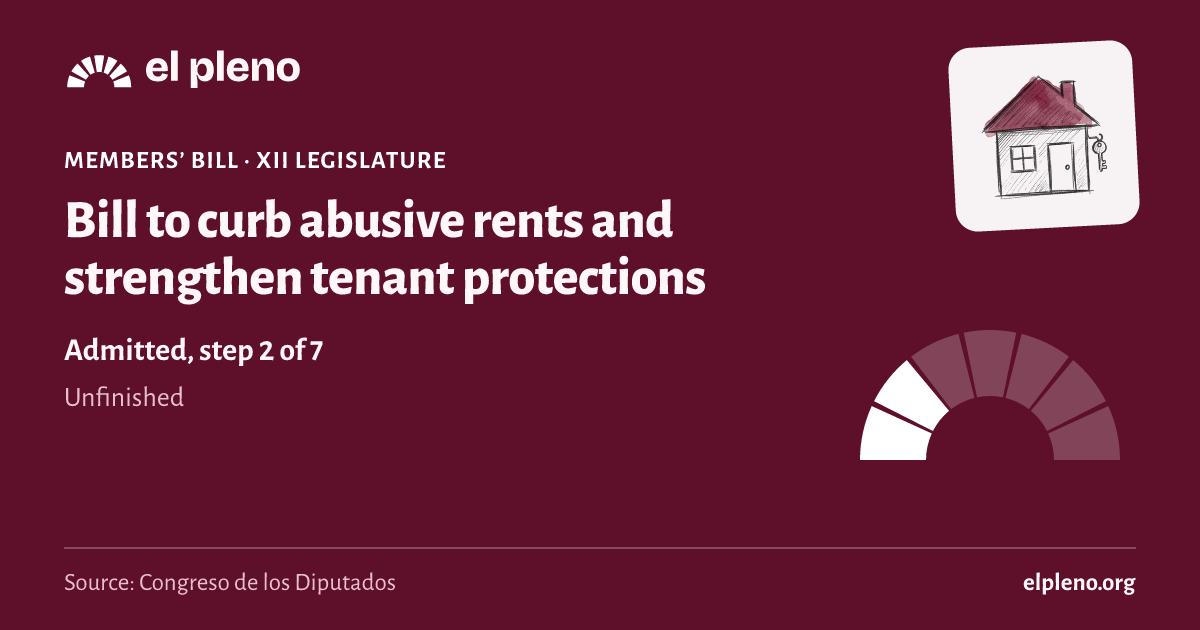
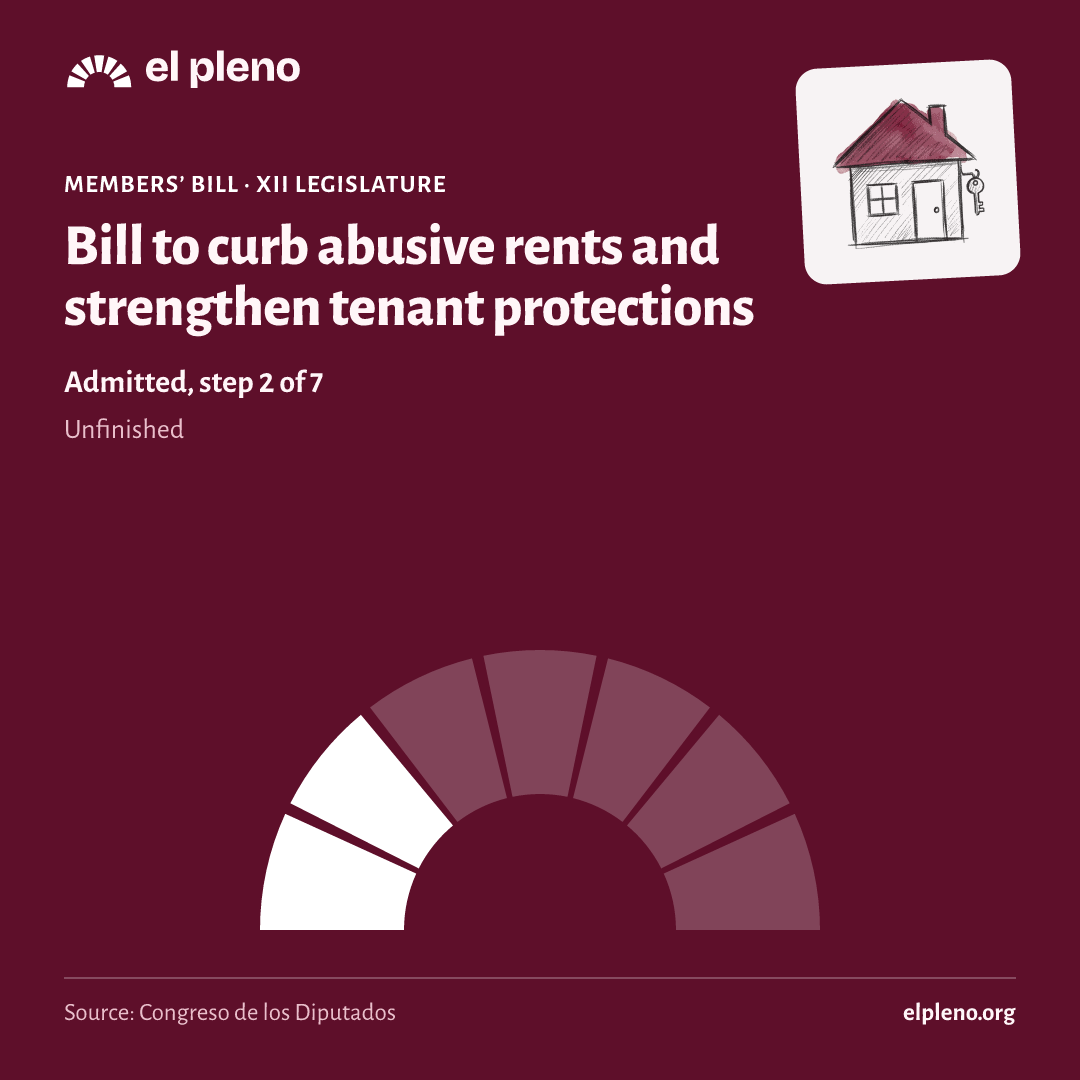
It took 2 of 7 steps. It reached Admitted, and today it is unfinished.
- Introduced5 April 2018Someone registers the text in the Congreso.
- Admitted10 April 2018The Bureau of the Congreso accepts it and, for a members’ bill, the plenary decides whether to consider it.
- Amendmentsnot reachedGroups propose changes.
- Committeenot reachedA committee goes through the text in detail.
- Plenarynot reachedAll 350 deputies vote.
- Senatenot reachedThe Senate can pass it, amend it or veto it.
- BOEnot reachedIt is published in the Official State Gazette (BOE) and comes into force.
See the 6 official steps on a timeline
Was there a plenary vote?
We have no plenary vote linked to this law in the Congreso’s data.
What happens next
What happens now?
The legislature ended before it finished. To go on, someone would have to introduce it again in the new Cortes.
It has not been presented again yet.
Sources
Where does all this come from?
- Congreso de los Diputados, file 122/000217
Official title, type, author, dates and stage.
Retrieved 11 November 2026
- The data comes from the open files of the Congreso, the Senate and the BOE, unaltered.
- Each deputy’s province is the one of their seat on the day of the vote.
- We only say “passed” or “rejected” when the majority needed is certain; otherwise we say which side had more votes.