What it is
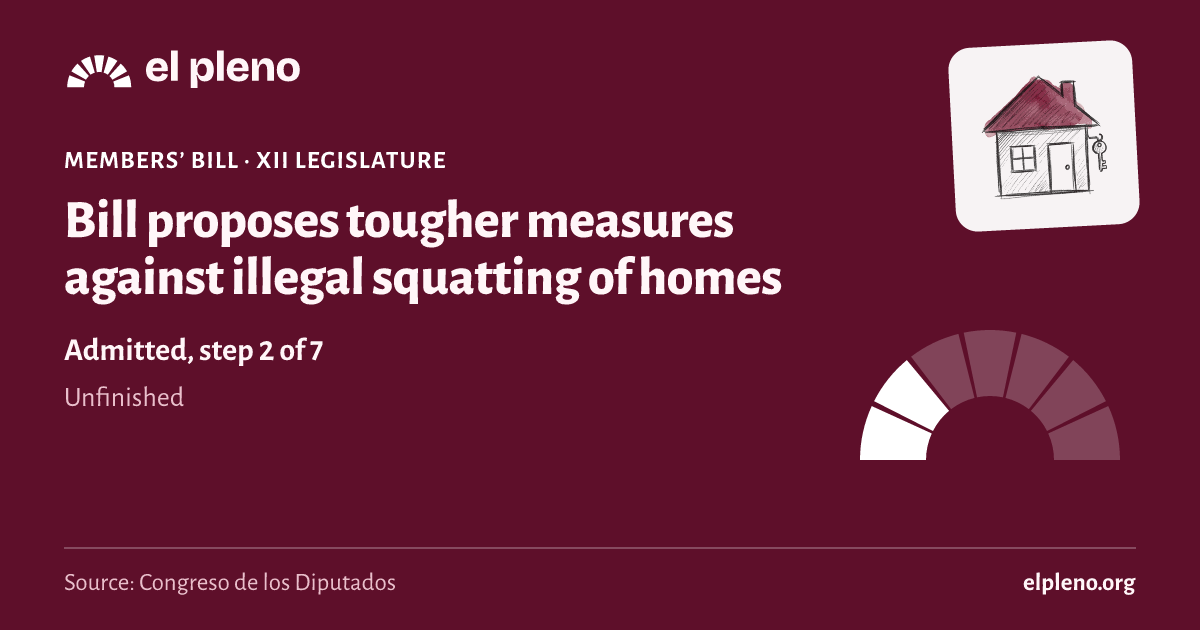
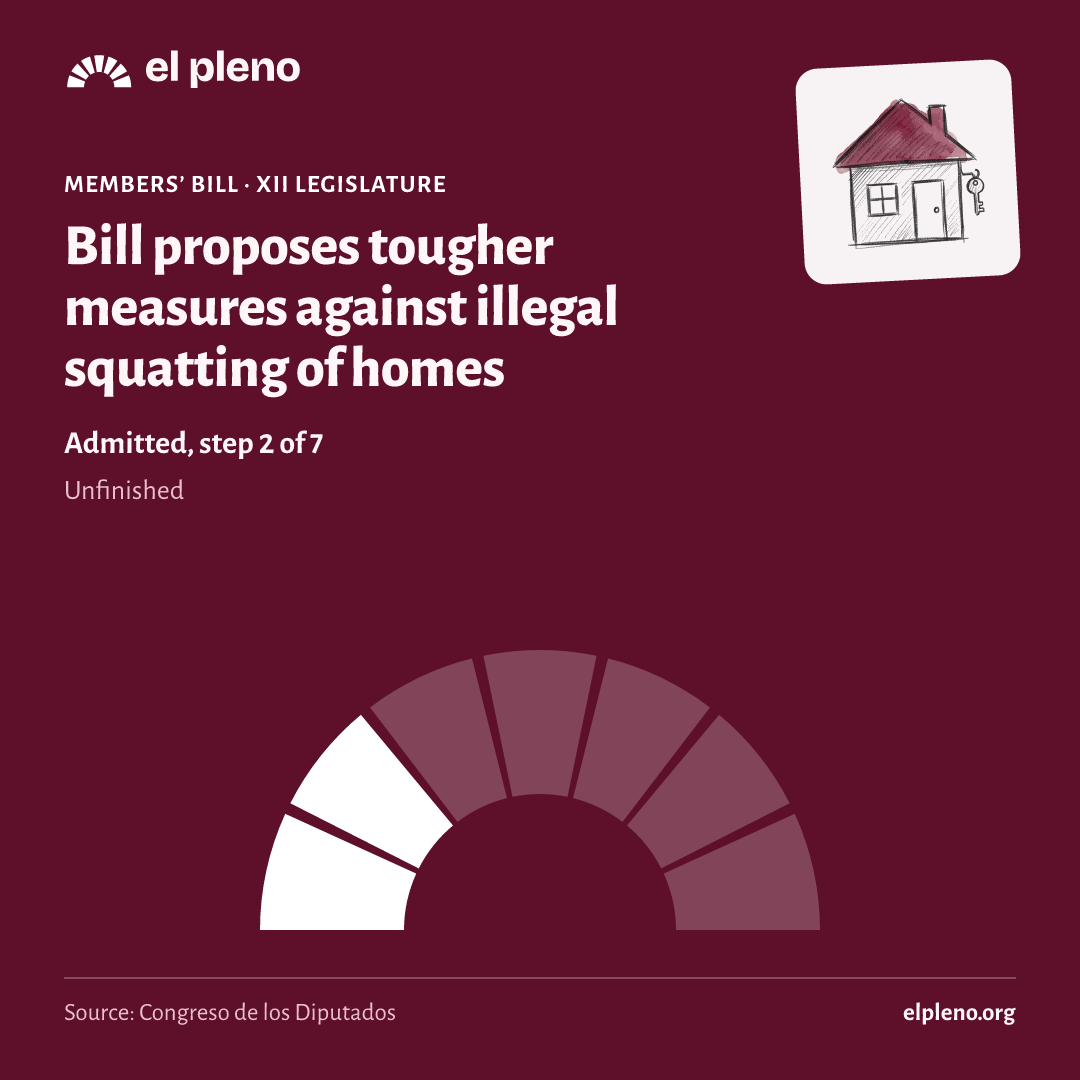
Bill proposes tougher measures against illegal squatting of homes
It is a members’ bill. Introduced by parliamentary groups, the Senate, regional governments or citizens. It was introduced on 20 March 2018. Introduced by: Grupo Parlamentario Ciudadanos.
Official title: Private member's bill to guarantee citizen security and coexistence against illegal occupation of housing.
Source: Congreso de los Diputados, file 122/000213· updated 11 Nov
Automatic summary, not yet reviewed
- The bill would give city councils powers to protect safety and community life against illegal squatting of homes and premises, including entering, identifying occupants, demanding action from owners and imposing sanctions.
- It would create a fast civil procedure so the owner or usufructuary can immediately recover possession of a squatted home, even suing unknown occupants.
- It would toughen the crime of usurpation in the Criminal Code, with prison terms in some cases and six to twelve month fines in the general case, and bring these crimes under the fast trial procedure.
- It would allow security forces to enter squatted homes that do not count as a dwelling if the owner reported it and there are signs of criminal use, always with judicial authorization.
- It would sanction squatters and owners who fail to act, including suspension of public benefits for one year in serious cases.
- It would add social measures: making the social housing fund permanent, centralizing information on housing benefits, and letting provincial councils serve people at risk of exclusion.
Who it affects
- Owners and usufructuaries of squatted homes: They would get a fast court procedure to recover their home, plus more municipal and police support.
- City councils: They would receive new powers and sanctioning authority against illegal squatting.
- Illegal squatters: They would face harsher penalties, fast trials and possible loss of public benefits.
- Homeowners' associations: They could file actions to stop activities from illegal squatting and hand them to the city council.
- Evicted people or those at risk of exclusion: They would have the social housing fund and better information on benefits.
Words worth knowing
- Usurpación (usurpation)
- Crime of occupying someone else's property without authorization.
- Acción de cesación (cessation action)
- Lawsuit to force someone to stop an activity banned in a homeowners' community.
- Juicio rápido (fast trial)
- Faster criminal procedure for certain specific crimes.
- Lanzamiento (eviction order)
- Court order to remove someone from a home.
- Fondo social de viviendas (social housing fund)
- Pool of homes reserved to house people in vulnerable situations.
It summarizes the text as it was introduced. It is written by artificial intelligence and may contain mistakes: the official text is what counts. Read the official text · How we make summaries
Where it stands
How far did it get?
It took 2 of 7 steps. It reached Admitted, and today it is unfinished.
- Introduced20 March 2018Someone registers the text in the Congreso.
- Admitted2 April 2018The Bureau of the Congreso accepts it and, for a members’ bill, the plenary decides whether to consider it.
- Amendmentsnot reachedGroups propose changes.
- Committeenot reachedA committee goes through the text in detail.
- Plenarynot reachedAll 350 deputies vote.
- Senatenot reachedThe Senate can pass it, amend it or veto it.
- BOEnot reachedIt is published in the Official State Gazette (BOE) and comes into force.
See the 6 official steps on a timeline
Was there a plenary vote?
We have no plenary vote linked to this law in the Congreso’s data.
What happens next
What happens now?
The legislature ended before it finished. To go on, someone would have to introduce it again in the new Cortes.
It was presented again:
- XIII Legislature, Congreso de los Diputados· Unfinished· nearly the same title Bill to speed up evictions of illegally occupied homes
- XIV Legislature, Congreso de los Diputados· Unfinished· nearly the same title Bill to speed up evictions of illegal home squatters
Sources
Where does all this come from?
- Congreso de los Diputados, file 122/000213
Official title, type, author, dates and stage.
Retrieved 11 November 2026
- The data comes from the open files of the Congreso, the Senate and the BOE, unaltered.
- Each deputy’s province is the one of their seat on the day of the vote.
- We only say “passed” or “rejected” when the majority needed is certain; otherwise we say which side had more votes.