What it is
Bill to stop treating street vending as a crime
It is a members’ bill. Introduced by parliamentary groups, the Senate, regional governments or citizens. It was introduced on 19 March 2018. Introduced by: Grupo Parlamentario Confederal de Unidos Podemos-En Comú Podem-En Marea.
Official title: Private member's bill 'Surviving is not a Crime' on the decriminalization of street vending (Organic).
Source: Congreso de los Diputados, file 122/000212· updated 11 Nov
Automatic summary, not yet reviewed
- The bill would amend the Criminal Code so that street or occasional selling of counterfeit products would carry a prison sentence of three to twelve months or, as an alternative, community service of thirty-one to eighty days. It would also no longer be a crime when the profit obtained is under 400 euros.
- Crimes committed before the law takes effect would be judged under the law in force at the time, but the new law would apply if it is more favorable to the defendant.
- The General Council of the Judiciary could assign specialized courts to review final judgments issued before the reform, applying the most favorable rule.
- In judgments under appeal, the parties could invoke the new law when it is more favorable, and the judge could apply it on their own initiative.
Who it affects
- People selling counterfeit products on the street, mostly migrants in an irregular situation: They would no longer commit a crime if the profit is under 400 euros, and in other cases the penalty could be community service instead of prison.
- People already convicted of street vending: They could request a review of their final judgment so the most favorable rule applies.
- Judges and courts: They would have rules for judging earlier cases, reviewing final judgments and handling pending appeals.
Words worth knowing
- Proposición de ley
- A bill introduced by a parliamentary group to become a law. Here it is not yet approved.
- Venta ambulante
- Street vending, selling goods from stalls without a fixed location, such as blankets of counterfeit products.
- Trabajos en beneficio de la comunidad
- Community service, an alternative to prison consisting of unpaid work for a set number of days.
- Sentencia firme
- A final judgment that can no longer be appealed and must be carried out.
- Recurso de casación
- An appeal to a higher court to review whether the judgment correctly applied the law.
It summarizes the text as it was introduced. It is written by artificial intelligence and may contain mistakes: the official text is what counts. Read the official text · How we make summaries
Where it stands
How far did it get?
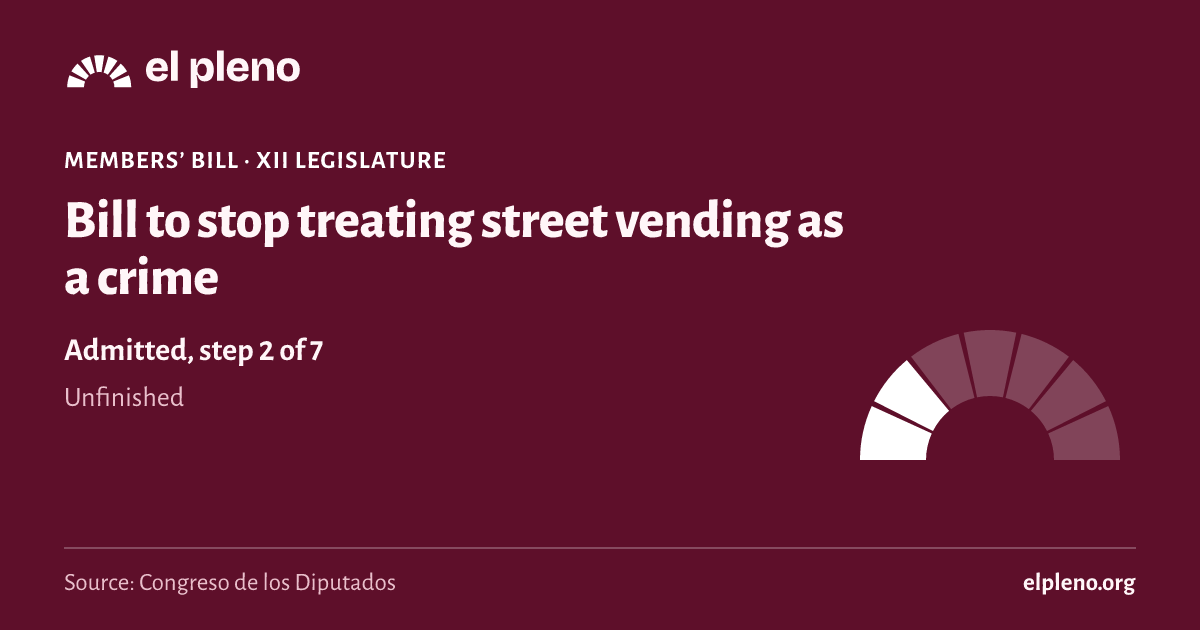
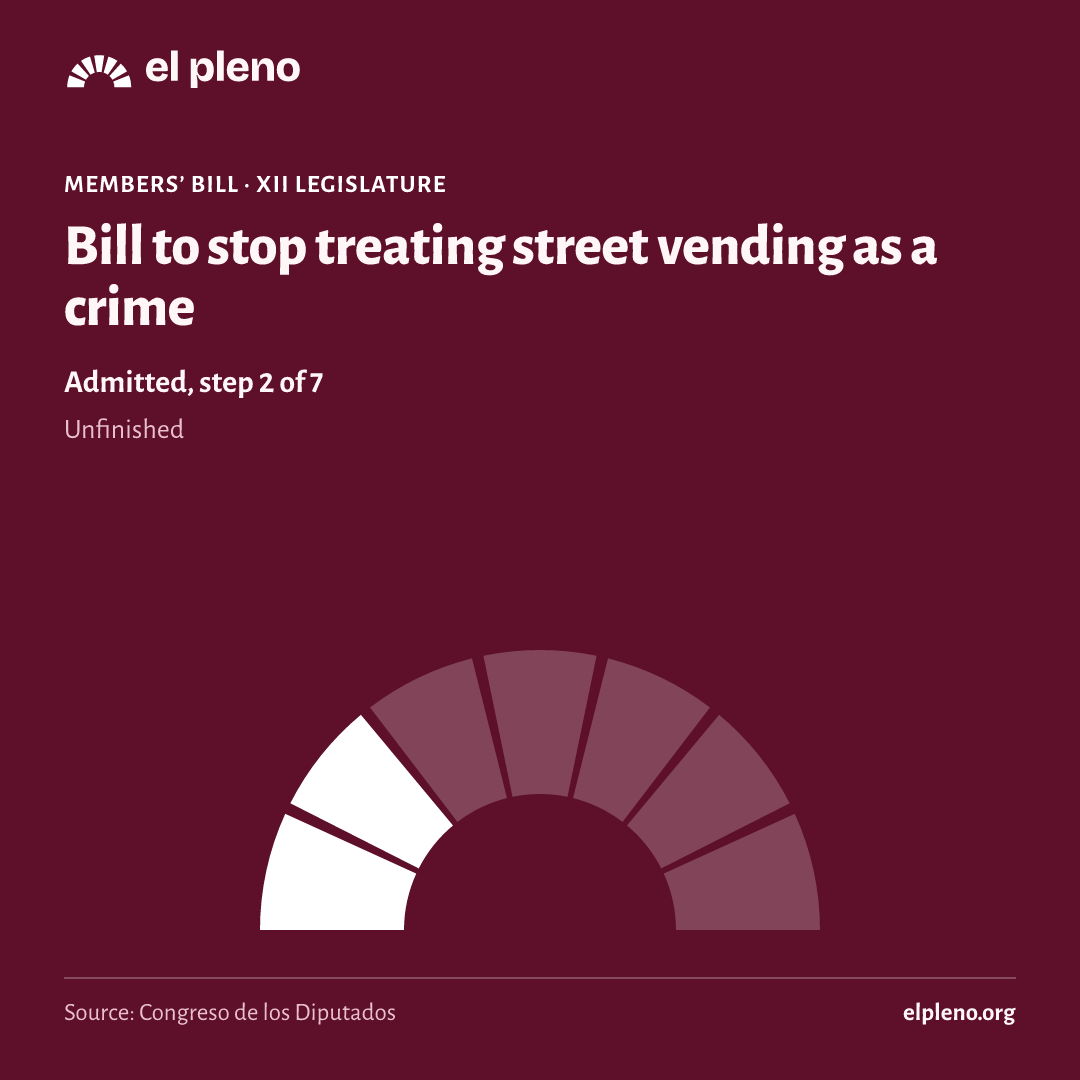
It took 2 of 7 steps. It reached Admitted, and today it is unfinished.
- Introduced19 March 2018Someone registers the text in the Congreso.
- Admitted2 April 2018The Bureau of the Congreso accepts it and, for a members’ bill, the plenary decides whether to consider it.
- Amendmentsnot reachedGroups propose changes.
- Committeenot reachedA committee goes through the text in detail.
- Plenarynot reachedAll 350 deputies vote.
- Senatenot reachedThe Senate can pass it, amend it or veto it.
- BOEnot reachedIt is published in the Official State Gazette (BOE) and comes into force.
See the 6 official steps on a timeline
Was there a plenary vote?
We have no plenary vote linked to this law in the Congreso’s data.
What happens next
What happens now?
The legislature ended before it finished. To go on, someone would have to introduce it again in the new Cortes.
It has not been presented again yet.
Sources
Where does all this come from?
- Congreso de los Diputados, file 122/000212
Official title, type, author, dates and stage.
Retrieved 11 November 2026
- The data comes from the open files of the Congreso, the Senate and the BOE, unaltered.
- Each deputy’s province is the one of their seat on the day of the vote.
- We only say “passed” or “rejected” when the majority needed is certain; otherwise we say which side had more votes.