What it is
Proposal to loosen deficit and public debt rules
It is a members’ bill. Introduced by parliamentary groups, the Senate, regional governments or citizens. It was introduced on 7 March 2018. Introduced by: Grupo Parlamentario Confederal de Unidos Podemos-En Comú Podem-En Marea.
Official title: Private member's Organic bill complementary to the Private member's bill to reform Article 135 of the Spanish Constitution.
Source: Congreso de los Diputados, file 122/000202· updated 11 Nov
Automatic summary, not yet reviewed
- The bill, introduced by Unidos Podemos-En Comú Podem-En Marea in 2018, would amend organic law A law on fundamental rights, the electoral system or other matters the Constitution reserves. It needs an absolute majority in the Congreso: 176 votes. 2/2012 on Budgetary Stability so that deficit and debt rules do not take priority over public services, full employment and poverty reduction.
- It would allow the stability limits to be exceeded when unemployment is above 10% of the labor force or the poverty risk rate is above the EU-27 average of the last five years. It would also raise the margin for structural deficit from 0.4% to 1% of GDP for long-term reforms.
- It would remove the spending rule and eliminate automatic correction measures and coercive measures against administrations that miss their targets, on the grounds that they undermine autonomy and self-government.
- It would replace several articles of Organic Law 2/2012: the purpose of the law, the definition of budgetary stability, compliance reports, rebalancing plans and the non-financial spending cap, among others.
- The Congress of Deputies (Congreso de los Diputados) and the Senate would vote on the stability targets proposed by the Government. If Congress rejects them, the Government would have one month to submit new ones.
- The law would take effect the day after its publication in the Official State Gazette (Boletín Oficial del Estado), except for measures that increase spending or reduce revenue in the current budget, which would take effect the following fiscal year.
Who it affects
- Public administrations (central government, autonomous communities and municipalities): They would have more room to run deficits and would lose automatic sanctions and interventions.
- Unemployed people and people at risk of poverty: Administrations could spend more to create jobs and reduce poverty without breaking the rules.
- The central Government: It could declare emergency situations and set stability targets even while in a caretaker role.
Words worth knowing
- Déficit estructural (structural deficit)
- The public budget shortfall calculated without counting spending and revenue that depend on the economic cycle.
- Regla de gasto (spending rule)
- A cap that stops administrations from using surplus money from good years to fund certain expenses.
- Ley orgánica (organic law)
- A type of Spanish law reserved for major matters, requiring an absolute majority in Congress to pass.
- PIB (GDP)
- Gross domestic product: the total value of everything a country's economy produces.
- organic law
- A law on fundamental rights, the electoral system or other matters the Constitution reserves. It needs an absolute majority in the Congreso: 176 votes.
It summarizes the text as it was introduced. It is written by artificial intelligence and may contain mistakes: the official text is what counts. Read the official text · How we make summaries
Where it stands
How far did it get?
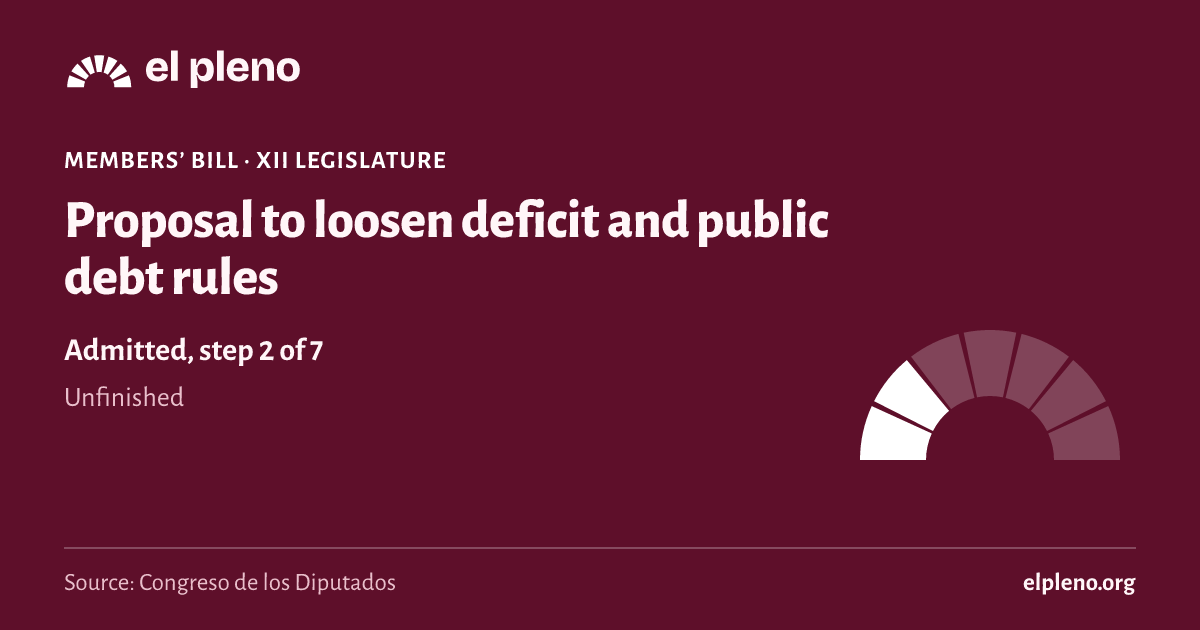
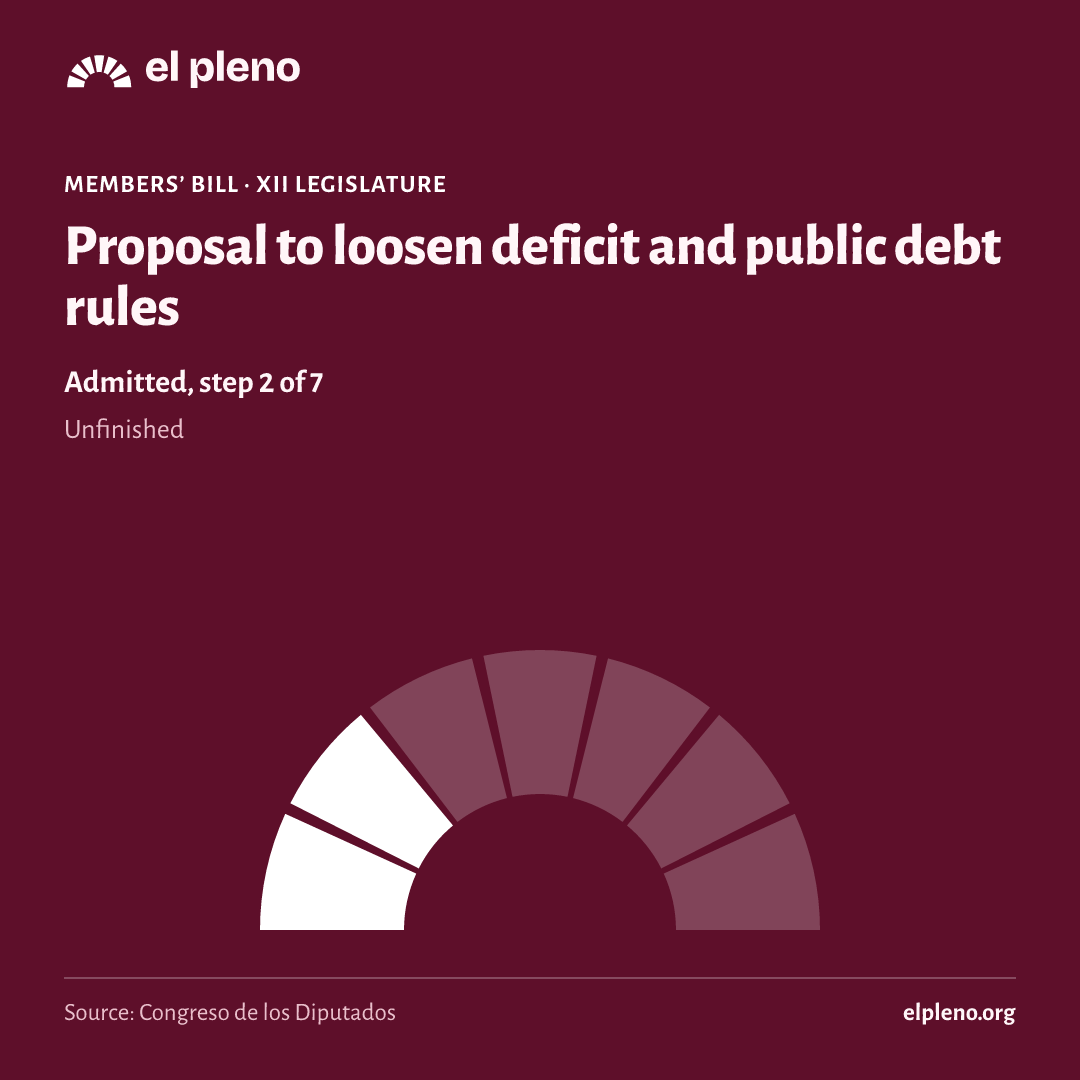
It took 2 of 7 steps. It reached Admitted, and today it is unfinished.
- Introduced7 March 2018Someone registers the text in the Congreso.
- Admitted13 March 2018The Bureau of the Congreso accepts it and, for a members’ bill, the plenary decides whether to consider it.
- Amendmentsnot reachedGroups propose changes.
- Committeenot reachedA committee goes through the text in detail.
- Plenarynot reachedAll 350 deputies vote.
- Senatenot reachedThe Senate can pass it, amend it or veto it.
- BOEnot reachedIt is published in the Official State Gazette (BOE) and comes into force.
See the 6 official steps on a timeline
Was there a plenary vote?
We have no plenary vote linked to this law in the Congreso’s data.
What happens next
What happens now?
The legislature ended before it finished. To go on, someone would have to introduce it again in the new Cortes.
It has not been presented again yet.
Sources
Where does all this come from?
- Congreso de los Diputados, file 122/000202
Official title, type, author, dates and stage.
Retrieved 11 November 2026
- The data comes from the open files of the Congreso, the Senate and the BOE, unaltered.
- Each deputy’s province is the one of their seat on the day of the vote.
- We only say “passed” or “rejected” when the majority needed is certain; otherwise we say which side had more votes.