What it is
Raising widow's pensions for people 65 or older with low income
It is a members’ bill. Introduced by parliamentary groups, the Senate, regional governments or citizens. It was introduced on 2 October 2017. Introduced by: Grupo Parlamentario Socialista.
Official title: Private member's bill improving the widow's pension for recipients aged 65 or older with lower income.
Source: Congreso de los Diputados, file 122/000131· updated 11 Nov
Automatic summary, not yet reviewed
- The bill would set the widow's pension at 60 % of the base for calculating it, for people aged 65 or older who receive no other public pension and have little income. The increase would apply to all Social Security schemes.
- The requirements would be being 65 or older, having no right to another public pension, not earning income from work, and not exceeding the income limit for the minimum widow's pension. If the person is not yet 65, the pension would be recalculated on day 1 of the month after reaching that age.
- The increase would be gradual: 58 % when the law takes effect, 59 % from January 1, 2018, and 60 % from January 1, 2019. It would also apply to existing widow's pensions whose recipients meet the requirements.
- The cost of the increase, compared with applying the current 52 %, would be paid by the State Budget through transfers to Social Security. The law would take effect the day after its publication in the Official State Gazette.
Who it affects
- People receiving a widow's pension who are 65 or older: Would see their pension rise to 60 % of the base for calculating it if they meet the requirements.
- Widow's pension recipients with other public pensions or income from work: Would not qualify for the increase.
- Pensioners whose pension is their main or only source of income and who have family dependents: Could keep applying the 70 % rate under the previous rules.
Words worth knowing
- Base reguladora (base for calculating the pension)
- The starting amount used to work out how much pension a person receives.
- Pensión de viudedad (widow's pension)
- A pension paid to the person whose spouse or partner has died.
- Pensión mínima de viudedad (minimum widow's pension)
- The minimum amount the State guarantees for this type of pension; there is an income limit to receive it.
It summarizes the text as it was introduced. It is written by artificial intelligence and may contain mistakes: the official text is what counts. Read the official text · How we make summaries
Where it stands
How far did it get?
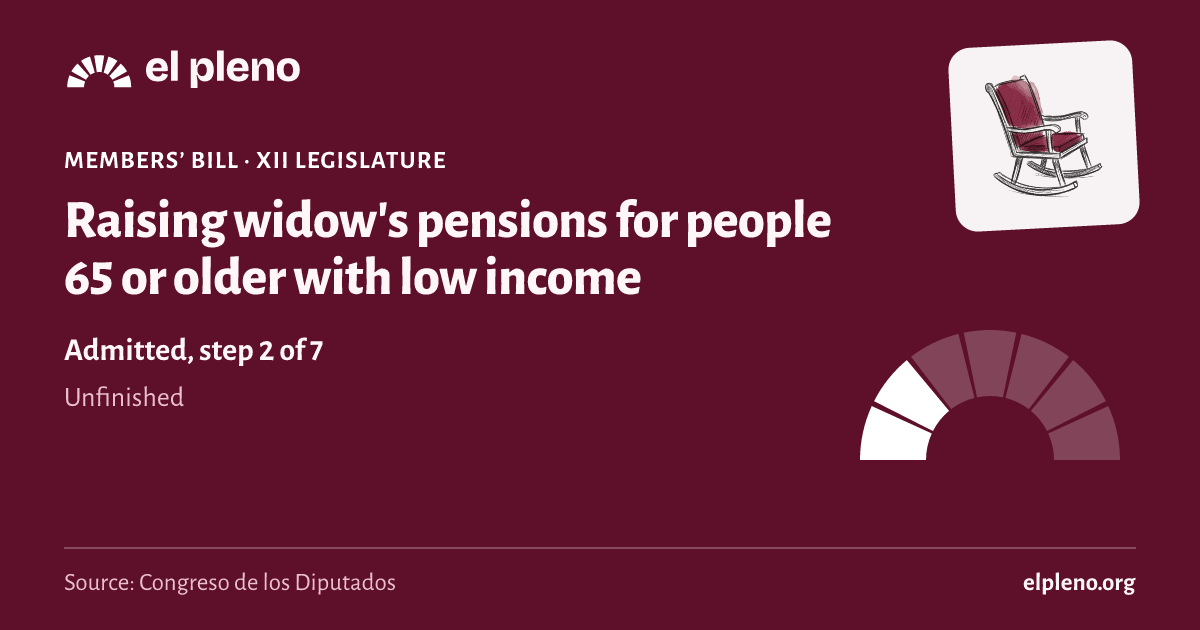
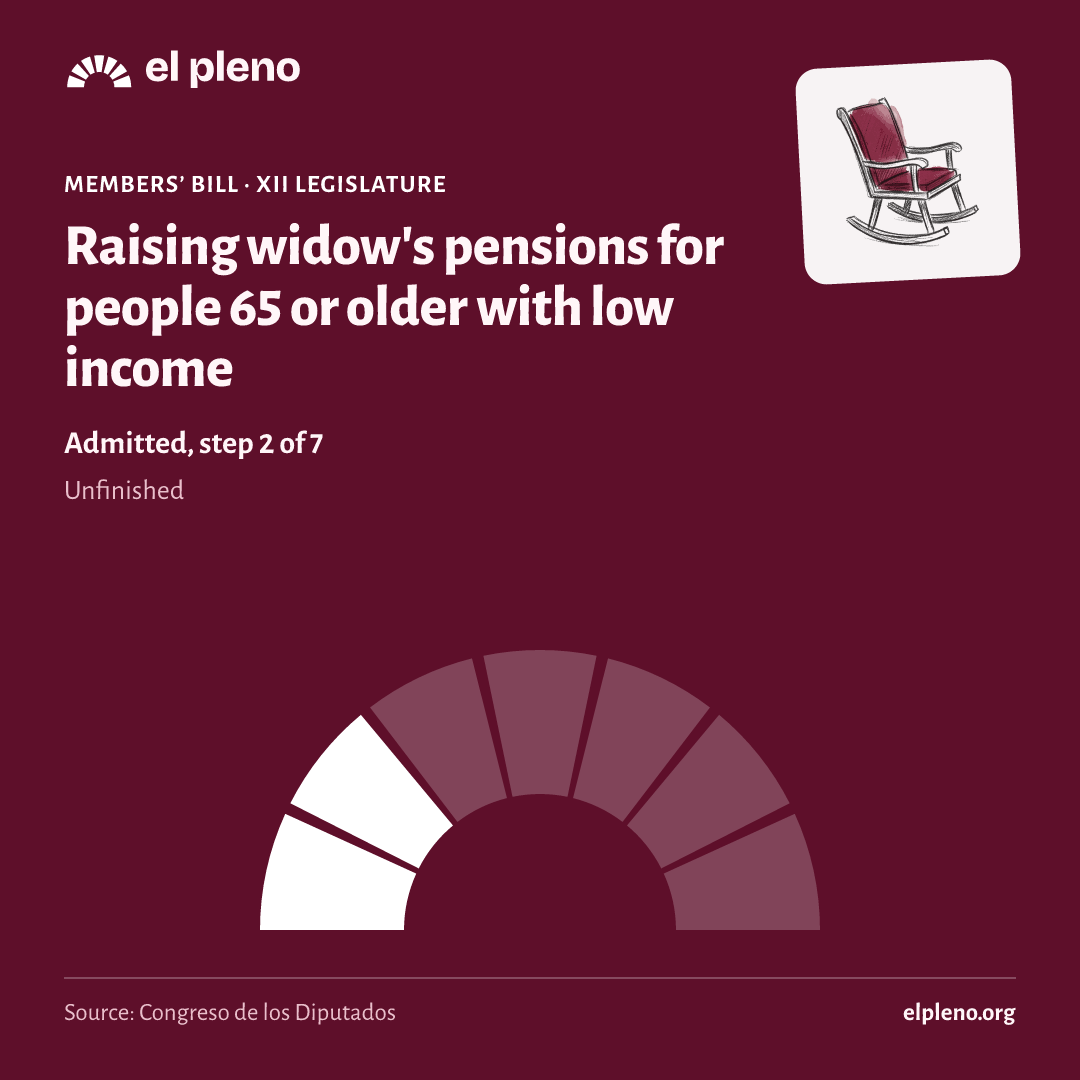
It took 2 of 7 steps. It reached Admitted, and today it is unfinished.
- Introduced2 October 2017Someone registers the text in the Congreso.
- Admitted10 October 2017The Bureau of the Congreso accepts it and, for a members’ bill, the plenary decides whether to consider it.
- Amendmentsnot reachedGroups propose changes.
- Committeenot reachedA committee goes through the text in detail.
- Plenarynot reachedAll 350 deputies vote.
- Senatenot reachedThe Senate can pass it, amend it or veto it.
- BOEnot reachedIt is published in the Official State Gazette (BOE) and comes into force.
See the 6 official steps on a timeline
Was there a plenary vote?
We have no plenary vote linked to this law in the Congreso’s data.
What happens next
What happens now?
The legislature ended before it finished. To go on, someone would have to introduce it again in the new Cortes.
It has not been presented again yet.
Sources
Where does all this come from?
- Congreso de los Diputados, file 122/000131
Official title, type, author, dates and stage.
Retrieved 11 November 2026
- The data comes from the open files of the Congreso, the Senate and the BOE, unaltered.
- Each deputy’s province is the one of their seat on the day of the vote.
- We only say “passed” or “rejected” when the majority needed is certain; otherwise we say which side had more votes.