What it is
Bill to have Congress choose the State Attorney General
It is a members’ bill. Introduced by parliamentary groups, the Senate, regional governments or citizens. It was introduced on 6 June 2017. Introduced by: Grupo Parlamentario Confederal de Unidos Podemos-En Comú Podem-En Marea.
Official title: Private member's bill amending Act 50/1981, of 30 December, regulating the Organic Statute of the Public Prosecutor's Office, to better guarantee the autonomy and impartiality of the Public Prosecutor's Office.
Source: Congreso de los Diputados, file 122/000104· updated 11 Nov
Automatic summary, not yet reviewed
- The bill would change how the State Attorney General (Fiscal General del Estado The State Attorney General, the person who heads the Public Prosecution Service and represents it across Spain.) is chosen: the Congress of Deputies would draw up a shortlist of three respected legal experts, including at least one woman, and the King would appoint one of them at the Government's proposal. Before the choice, the General Council of the Judiciary and the Prosecution Council would be heard.
- The State Attorney General's term would last five years, renewable for another five. Before the term ended, removal would only be possible for resignation, conflicts of interest, incapacity, or serious or repeated failure to perform duties, and the Congress would rule on those reasons after a report from the Prosecution Council.
- The State Attorney General would have to appear before the Justice Committee of the Congress of Deputies at the request of any parliamentary group, to report on their actions, the instructions given to prosecutors, or the reasons behind appointment proposals. Each group could only request this twice per session period.
- Orders and instructions from the State Attorney General to subordinates would always have to be in writing and with reasons. If they concern matters directly affecting any member of the Government, the Attorney General would first have to hear the Sala Prosecution Board.
Who it affects
- The State Attorney General (Fiscal General del Estado): Their appointment would depend on a congressional shortlist, their term would be five renewable years, and there would be new limits on removal and on giving instructions.
- Prosecutors: Orders from their leadership would have to be written and reasoned, and the Prosecution Council would gain weight in appointment and removal.
- The Congress of Deputies (Congreso de los Diputados): It would gain a central role in choosing, overseeing and, where applicable, removing the State Attorney General.
- The Government: It would lose influence over the Public Prosecution Service, since it would no longer freely propose the candidate.
Words worth knowing
- Ministerio Fiscal
- The Public Prosecution Service, the public body of prosecutors that defends the law and citizens' rights before the courts.
- Fiscal General del Estado
- The State Attorney General, the person who heads the Public Prosecution Service and represents it across Spain.
- Consejo Fiscal
- The Prosecution Council, the body representing all prosecutors.
- Consejo General del Poder Judicial
- The General Council of the Judiciary, the governing body of Spanish judges.
- Terna
- A shortlist of three candidates from which one is chosen.
It summarizes the text as it was introduced. It is written by artificial intelligence and may contain mistakes: the official text is what counts. Read the official text · How we make summaries
Where it stands
How far did it get?
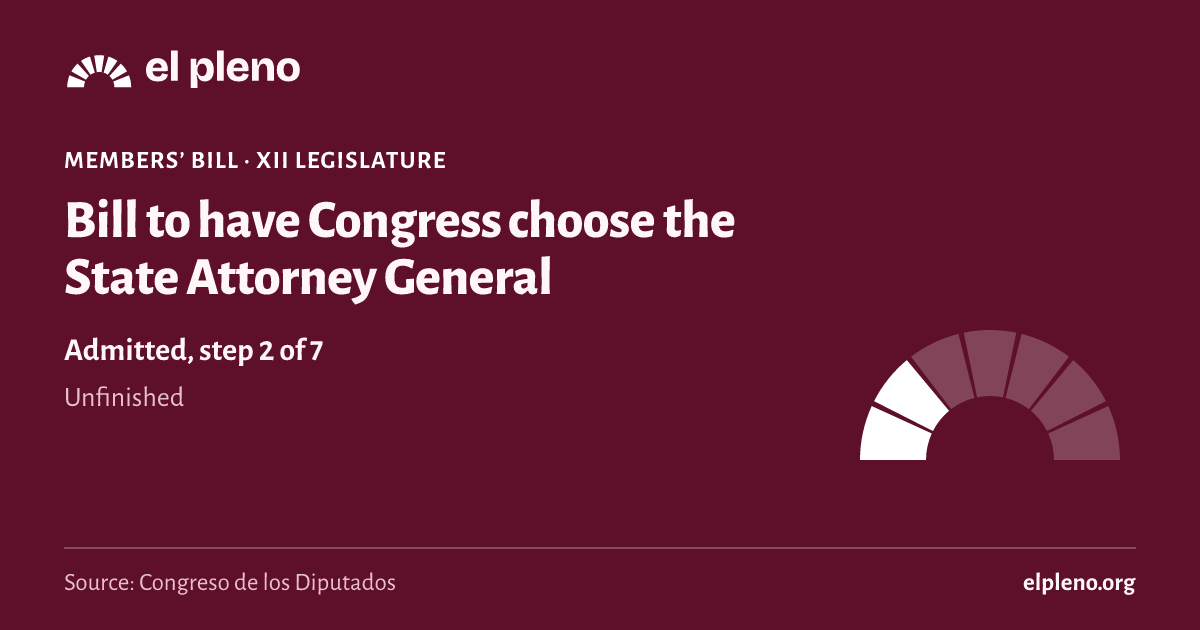
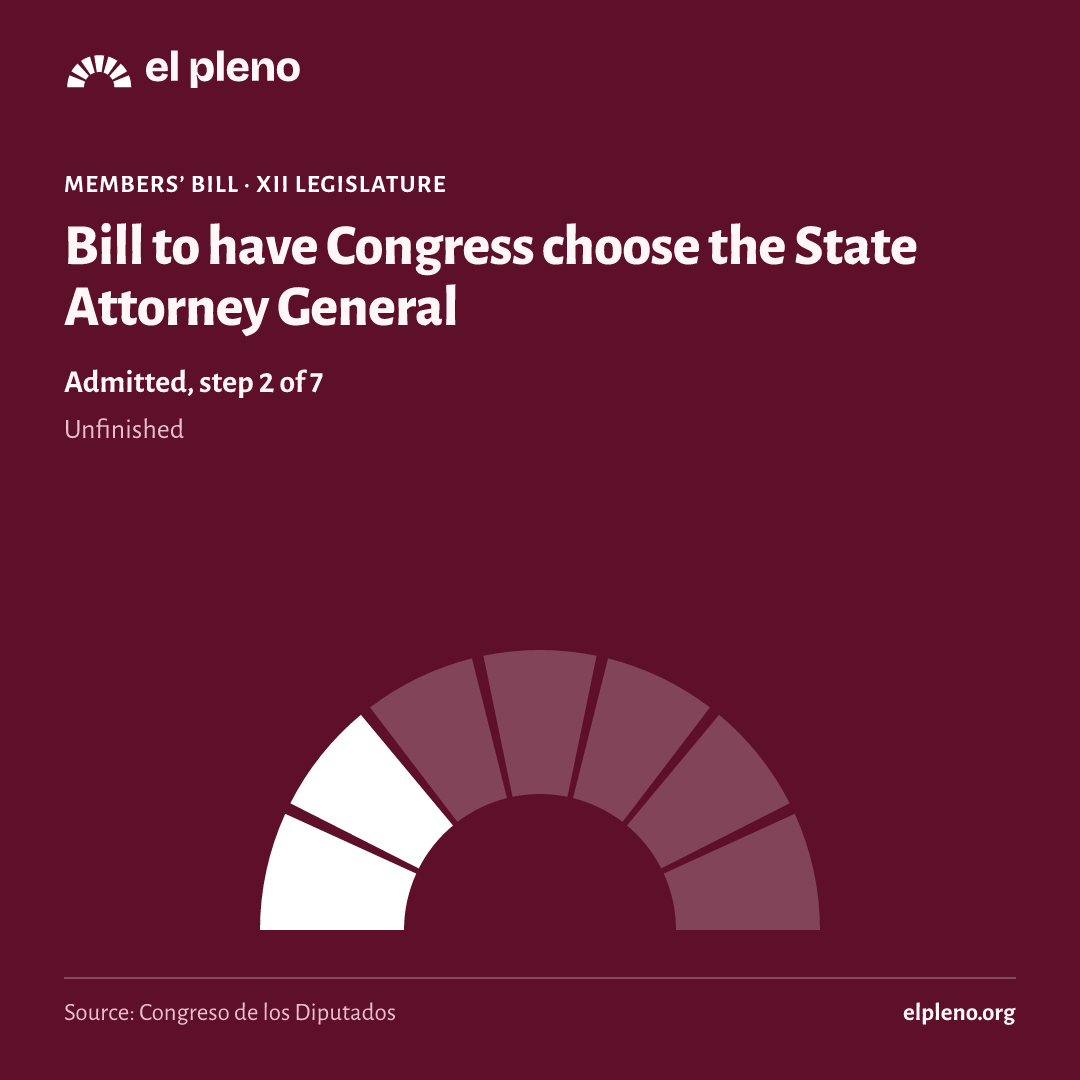
It took 2 of 7 steps. It reached Admitted, and today it is unfinished.
- Introduced6 June 2017Someone registers the text in the Congreso.
- Admitted12 June 2017The Bureau of the Congreso accepts it and, for a members’ bill, the plenary decides whether to consider it.
- Amendmentsnot reachedGroups propose changes.
- Committeenot reachedA committee goes through the text in detail.
- Plenarynot reachedAll 350 deputies vote.
- Senatenot reachedThe Senate can pass it, amend it or veto it.
- BOEnot reachedIt is published in the Official State Gazette (BOE) and comes into force.
See the 6 official steps on a timeline
Was there a plenary vote?
We have no plenary vote linked to this law in the Congreso’s data.
What happens next
What happens now?
The legislature ended before it finished. To go on, someone would have to introduce it again in the new Cortes.
It has not been presented again yet.
Sources
Where does all this come from?
- Congreso de los Diputados, file 122/000104
Official title, type, author, dates and stage.
Retrieved 11 November 2026
- The data comes from the open files of the Congreso, the Senate and the BOE, unaltered.
- Each deputy’s province is the one of their seat on the day of the vote.
- We only say “passed” or “rejected” when the majority needed is certain; otherwise we say which side had more votes.