What it is
Bill to make birth leave equal for both parents
It is a members’ bill. Introduced by parliamentary groups, the Senate, regional governments or citizens. It was introduced on 4 January 2017. Introduced by: Grupo Parlamentario Confederal de Unidos Podemos-En Comú Podem-En Marea.
Official title: Private member's bill regarding the reform of the leave and benefits system for the care and attention of minors by their parents, in cases of birth, adoption, custody for adoption, or foster care.
Source: Congreso de los Diputados, file 122/000056· updated 11 Nov
Automatic summary, not yet reviewed
- The bill proposes that each parent get their own sixteen-week leave for birth, adoption, pre-adoption foster care or foster care, with no part that can be transferred or shared, and a benefit of 100 % of the base rate.
- The leave would have two parts: an initial parental leave of two mandatory weeks right after the birth or adoption, and a parental leave for childrearing of fourteen weeks, four mandatory and ten voluntary, to be taken within twelve months.
- Equalization would be gradual: the other parent's leave would grow from six weeks in 2017 to fourteen in 2021, and from January 1, 2022 each parent would have the full sixteen weeks with no transfers.
- The leave would be extended by two more weeks if the child has a disability or in cases of multiple births or adoptions, and if the newborn is hospitalized the leave can start at discharge or be extended by up to thirteen additional weeks.
- A cash benefit of 100 % of the base rate would be paid during the leave, with minimum contribution periods based on age, plus a non-contributory benefit of 42 days for those who have not contributed enough, extended in cases such as large or single-parent families.
- The Government would have to run awareness campaigns, submit yearly statistics to the Spanish Parliament on how the leave is used, and approve a plan to guarantee an affordable nursery school place from the day after the leave ends.
Who it affects
- Employees who become parents through birth, adoption, pre-adoption foster care or foster care: They would get their own equal sixteen-week leave with a full benefit.
- Public employees: The same sixteen-week leave would apply to them with their own rules.
- Workers without enough social security contributions: They could receive a non-contributory benefit of 42 days from birth.
- Employers: They would have to adapt to the new leave rules, including part-time options.
- Families with children of nursery school age: The Government would have to approve a plan for an affordable place after the leave ends.
Words worth knowing
- Base reguladora
- Reference amount used to calculate a social security benefit; here 100 % of it would be paid.
- Guarda con fines de adopción
- Pre-adoption foster care: a court or authority places a child with a person or family before the adoption is finalized.
- Acogimiento
- Foster care: a child lives with a family other than their birth family, temporarily or permanently.
- Prestación no contributiva
- Money paid by social security without requiring the minimum contribution period.
- IPREM
- A Spanish public income index used as a reference to calculate some benefits.
It summarizes the text as it was introduced. It is written by artificial intelligence and may contain mistakes: the official text is what counts. Read the official text · How we make summaries
Where it stands
How far did it get?
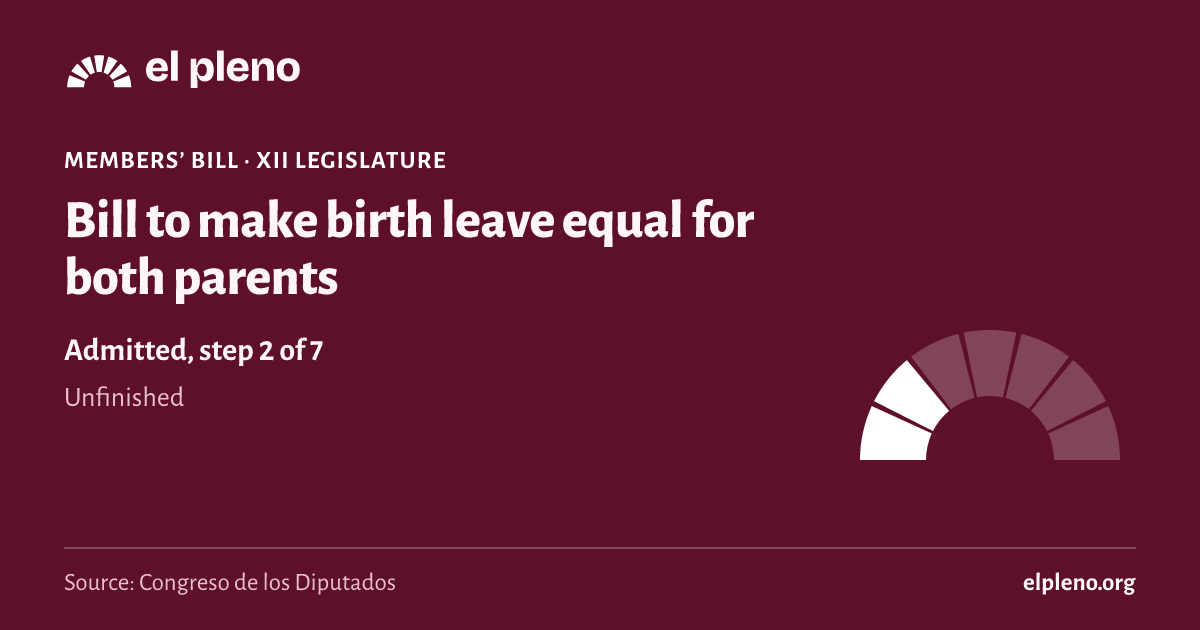
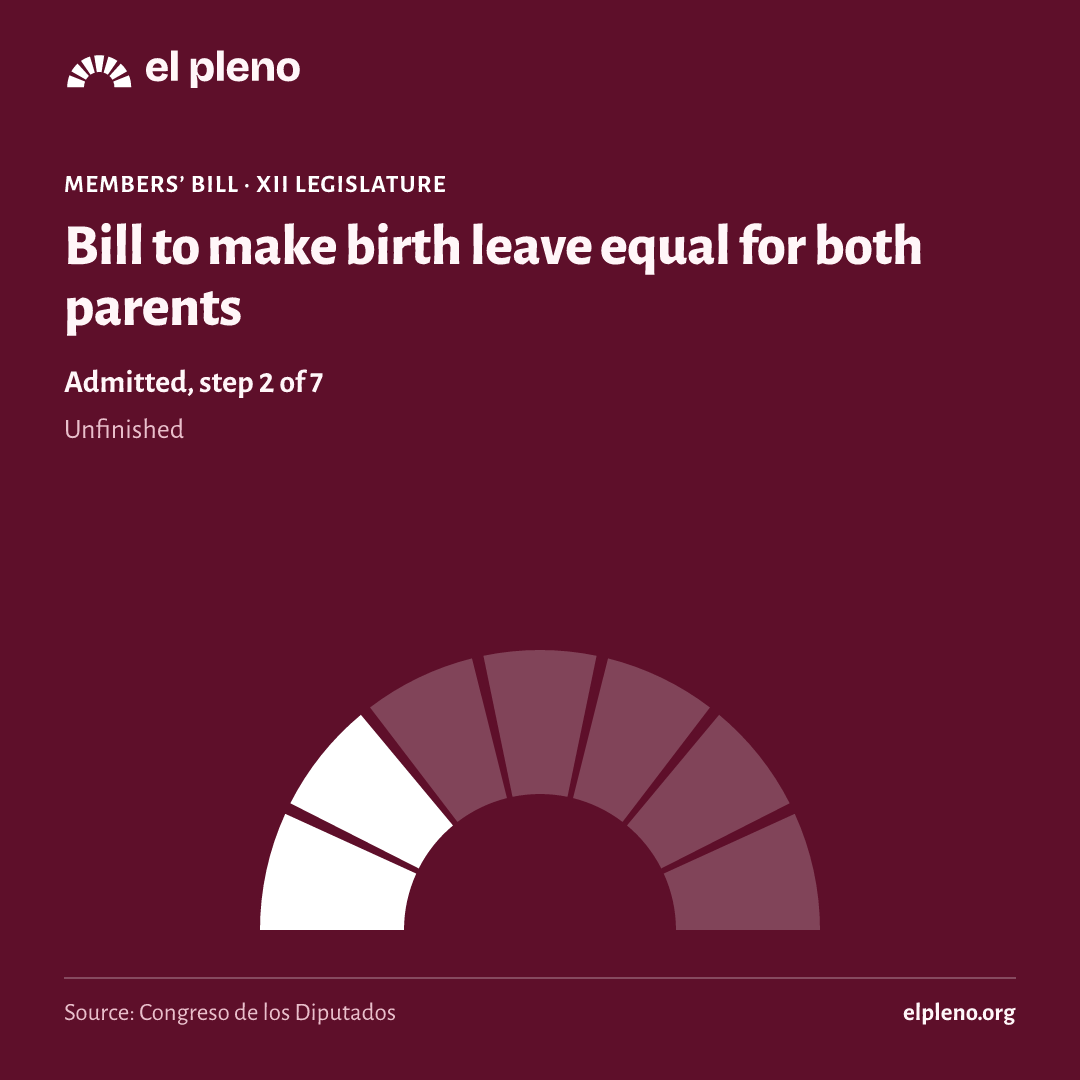
It took 2 of 7 steps. It reached Admitted, and today it is unfinished.
- Introduced4 January 2017Someone registers the text in the Congreso.
- Admitted11 January 2017The Bureau of the Congreso accepts it and, for a members’ bill, the plenary decides whether to consider it.
- Amendmentsnot reachedGroups propose changes.
- Committeenot reachedA committee goes through the text in detail.
- Plenarynot reachedAll 350 deputies vote.
- Senatenot reachedThe Senate can pass it, amend it or veto it.
- BOEnot reachedIt is published in the Official State Gazette (BOE) and comes into force.
See the 6 official steps on a timeline
Was there a plenary vote?
We have no plenary vote linked to this law in the Congreso’s data.
What happens next
What happens now?
The legislature ended before it finished. To go on, someone would have to introduce it again in the new Cortes.
It has not been presented again yet.
Sources
Where does all this come from?
- Congreso de los Diputados, file 122/000056
Official title, type, author, dates and stage.
Retrieved 11 November 2026
- The data comes from the open files of the Congreso, the Senate and the BOE, unaltered.
- Each deputy’s province is the one of their seat on the day of the vote.
- We only say “passed” or “rejected” when the majority needed is certain; otherwise we say which side had more votes.