What it is
Proposal to scrap the single sports license
It is a members’ bill. Introduced by parliamentary groups, the Senate, regional governments or citizens. It was introduced on 30 September 2016. Introduced by: Grupo Parlamentario Mixto.
Official title: Private member's bill amending Law 15/2014, of September 16, on the rationalization of the Public Sector and other administrative reform measures, with the aim of repealing the single federal license for sports activities.
Source: Congreso de los Diputados, file 122/000034· updated 11 Nov
Automatic summary, not yet reviewed
- Law 15/2014 created a single sports license that allows its holder to take part in any official competition, whether regional, national or international.
- Before, regional federations issued cheaper licenses to compete in their region. With the single license, athletes who only compete in their region pay more.
- The single license is registered with the national federation and includes compensation for Spanish (national) federations. The bill says this leaves regional federations with fewer resources.
- The bill would delete Article 23 of Law 15/2014, the provision that introduced the single license. It would also void any proceedings started under the previous wording, and the law would take effect the day after its publication in the Boletín Oficial del Estado (official gazette).
Who it affects
- Athletes who only compete in their autonomous region: They would pay more for a license they often do not need, with more paperwork.
- Regional sports federations: They would lose resources if cheap single licenses are issued by federations far from the athlete's home.
- Spanish (national) sports federations: They would receive compensation approved by their general assembly.
Words worth knowing
- Licencia federativa
- A license from a sports federation that allows official competition.
- Homologar una licencia
- To validate a regional license so it also works for national or international competitions, paying an extra fee.
- Proposición de ley
- A bill introduced by members of Congress. It is not a law until it is passed.
- CORA
- Commission for the Reform of Public Administrations, the body that proposed simplifying the licenses.
It summarizes the text as it was introduced. It is written by artificial intelligence and may contain mistakes: the official text is what counts. Read the official text · How we make summaries
Where it stands
How far did it get?
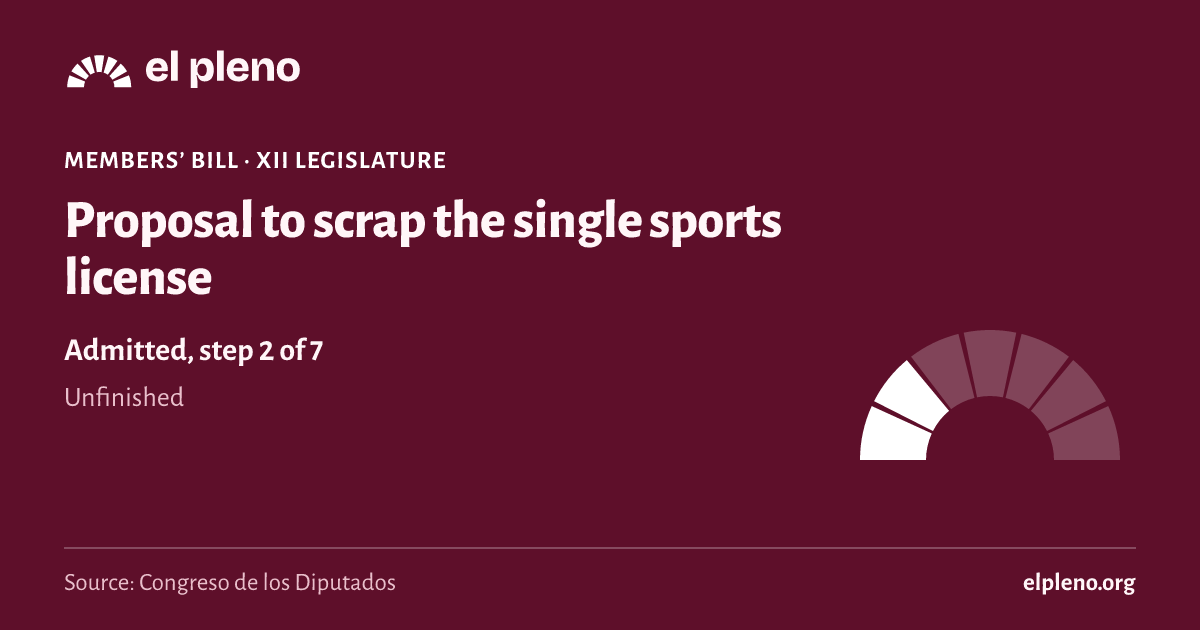
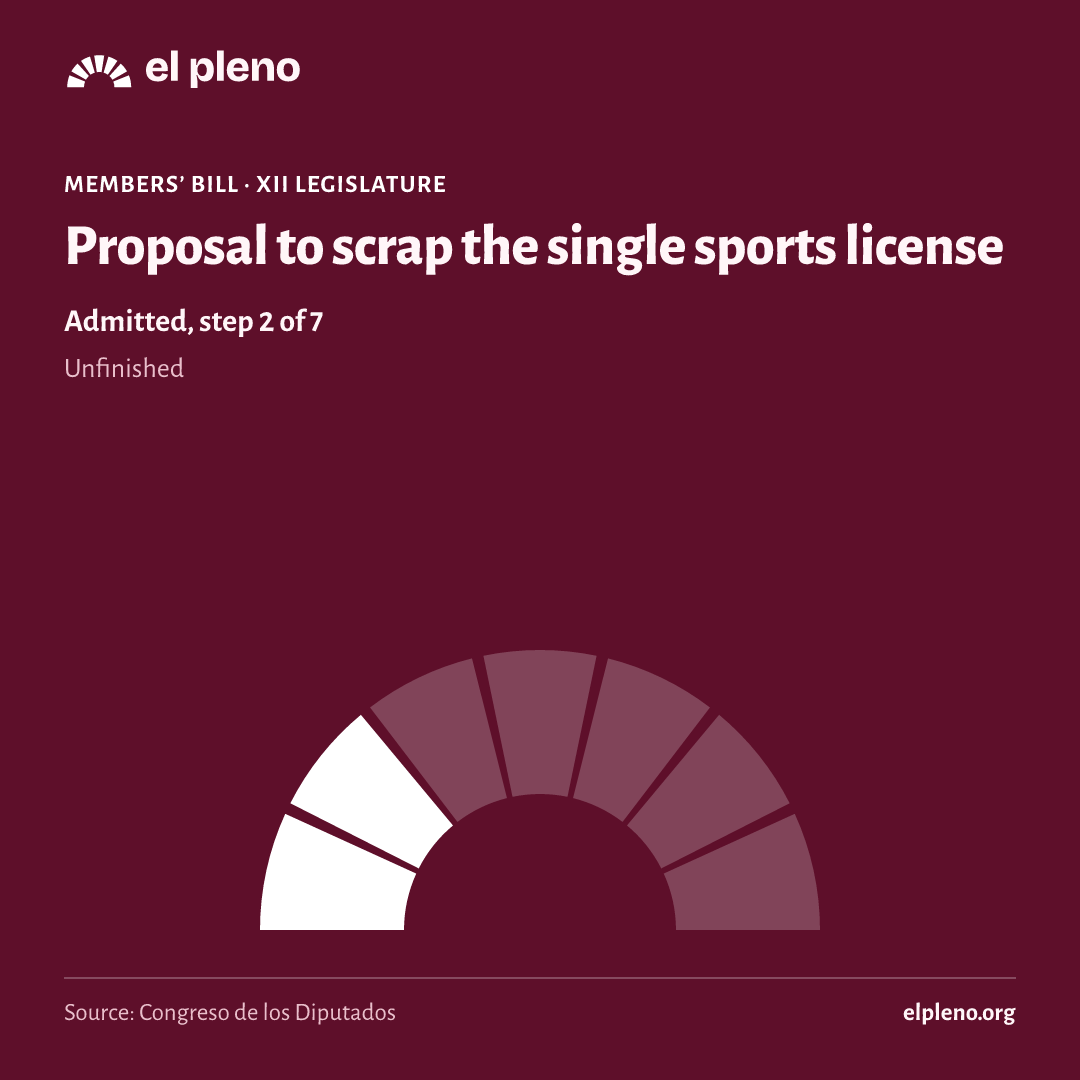
It took 2 of 7 steps. It reached Admitted, and today it is unfinished.
- Introduced30 September 2016Someone registers the text in the Congreso.
- Admitted4 October 2016The Bureau of the Congreso accepts it and, for a members’ bill, the plenary decides whether to consider it.
- Amendmentsnot reachedGroups propose changes.
- Committeenot reachedA committee goes through the text in detail.
- Plenarynot reachedAll 350 deputies vote.
- Senatenot reachedThe Senate can pass it, amend it or veto it.
- BOEnot reachedIt is published in the Official State Gazette (BOE) and comes into force.
See the 6 official steps on a timeline
Was there a plenary vote?
We have no plenary vote linked to this law in the Congreso’s data.
What happens next
What happens now?
The legislature ended before it finished. To go on, someone would have to introduce it again in the new Cortes.
It has not been presented again yet.
Presented before in:
- X Legislature, Congreso de los Diputados· Unfinished Proposal to scrap the single sports federation license
Sources
Where does all this come from?
- Congreso de los Diputados, file 122/000034
Official title, type, author, dates and stage.
Retrieved 11 November 2026
- The data comes from the open files of the Congreso, the Senate and the BOE, unaltered.
- Each deputy’s province is the one of their seat on the day of the vote.
- We only say “passed” or “rejected” when the majority needed is certain; otherwise we say which side had more votes.