What it is
Bill to allow self-consumption of electricity without charges or red tape
It is a members’ bill. Introduced by parliamentary groups, the Senate, regional governments or citizens. It was introduced on 10 August 2016. Introduced by: Grupo Parlamentario Ciudadanos.
Official title: Private member's bill for urgent measures to promote self-consumption of electricity.
Source: Congreso de los Diputados, file 122/000017· updated 11 Nov
Automatic summary, not yet reviewed
- The bill would exempt self-consumed electricity from all system charges and tolls, and would eliminate the administrative register for self-consumption. Only whether the installation feeds surplus power into the grid would matter.
- It would allow several consumers to share one self-consumption installation, which is key for apartment buildings. To do so, it repeals Article 4.3 of Royal Decree 900/2015, which blocked this.
- Installations that feed nothing into the grid would only need to meet technical regulations and file a simple notification, with no prior permits or grid connection point.
- It adapts the penalty regime: for self-consumption offenses, the maximum fine would be 10% of the annual billing for electricity consumed.
Who it affects
- People and businesses that want to install solar panels or other sources to use their own power.: They would pay no charges or tolls on self-consumed energy and would face less paperwork if they do not feed the grid.
- Homeowners' associations and consumers sharing an installation.: They could share a single self-consumption installation.
- Installations with surpluses up to 100 kW.: They would be exempt from registering in the administrative register of production installations.
Words worth knowing
- Autoconsumo (self-consumption)
- Using electricity you generate yourself, for example with solar panels, instead of buying it all from the grid.
- Peajes y cargos (tolls and charges)
- Parts of the power bill that pay for grid use and other costs of the electricity system.
- Excedentes (surpluses)
- Extra energy you generate and feed into the grid.
- Línea directa (direct line)
- A cable linking a generation installation to the consumption one without going through the public grid.
It summarizes the text as it was introduced. It is written by artificial intelligence and may contain mistakes: the official text is what counts. Read the official text · How we make summaries
Where it stands
How far did it get?
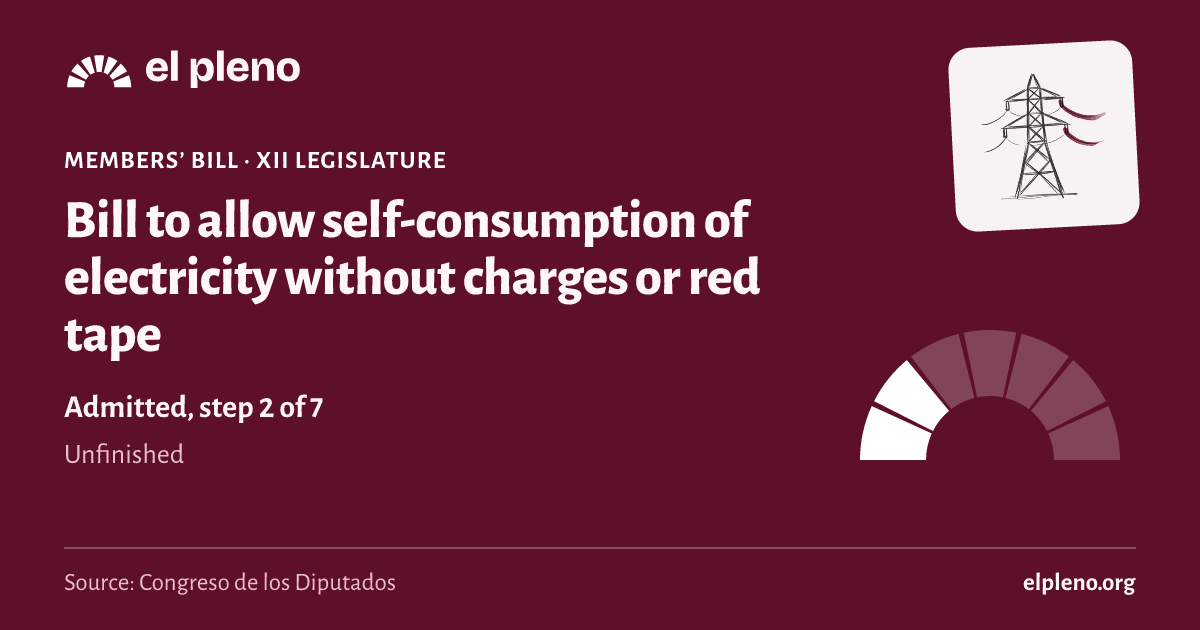
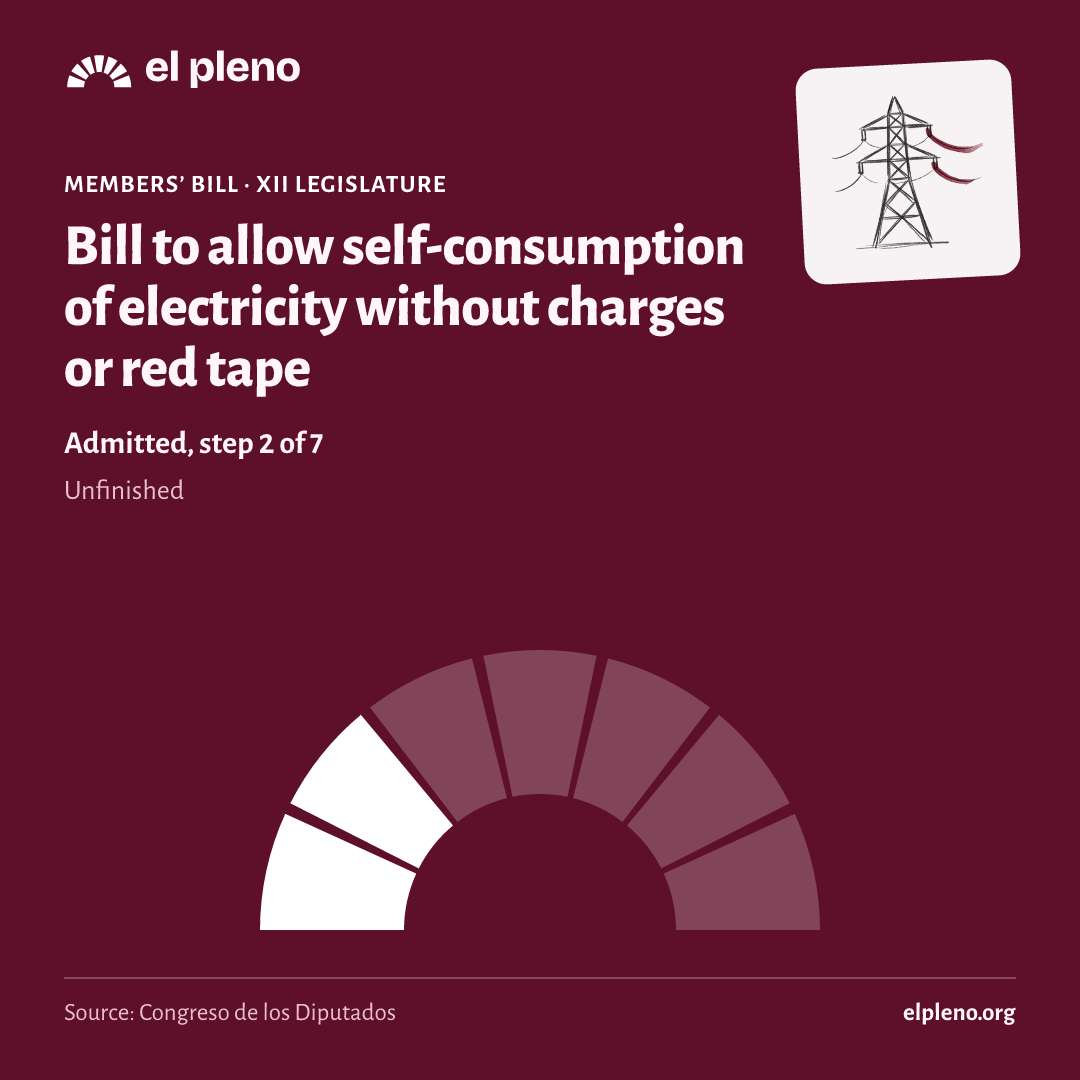
It took 2 of 7 steps. It reached Admitted, and today it is unfinished.
- Introduced10 August 2016Someone registers the text in the Congreso.
- Admitted6 September 2016The Bureau of the Congreso accepts it and, for a members’ bill, the plenary decides whether to consider it.
- Amendmentsnot reachedGroups propose changes.
- Committeenot reachedA committee goes through the text in detail.
- Plenarynot reachedAll 350 deputies vote.
- Senatenot reachedThe Senate can pass it, amend it or veto it.
- BOEnot reachedIt is published in the Official State Gazette (BOE) and comes into force.
See the 6 official steps on a timeline
Was there a plenary vote?
We have no plenary vote linked to this law in the Congreso’s data.
What happens next
What happens now?
The legislature ended before it finished. To go on, someone would have to introduce it again in the new Cortes.
It has not been presented again yet.
Sources
Where does all this come from?
- Congreso de los Diputados, file 122/000017
Official title, type, author, dates and stage.
Retrieved 11 November 2026
- The data comes from the open files of the Congreso, the Senate and the BOE, unaltered.
- Each deputy’s province is the one of their seat on the day of the vote.
- We only say “passed” or “rejected” when the majority needed is certain; otherwise we say which side had more votes.