What it is
Bill proposes Spanish nationality for grandchildren and children born abroad
It is a members’ bill. Introduced by parliamentary groups, the Senate, regional governments or citizens. It was introduced on 14 July 2015. Introduced by: Grupo Parlamentario de IU, ICV-EUiA, CHA: La Izquierda Plural.
Official title: Private member's bill on the granting of Spanish nationality to descendants of Spaniards born abroad, and recognizing and expanding rights for cases excluded by various regulations.
Source: Congreso de los Diputados, file 122/000209· updated 11 Nov
Automatic summary, not yet reviewed
- The bill would grant Spanish nationality of origin to children born abroad to a Spanish father or mother, even if that parent lost their nationality for political, economic or gender reasons. It would also grant nationality by option of origin to grandchildren born outside Spain and to those who lost it by failing to confirm it when they came of age.
- Applicants would prove they descend from a Spaniard using certified birth records for themselves, their parents, grandparents and, in some cases, great-grandparents, issued by Spanish or foreign civil registries. For those born before 1870, a baptism certificate could be submitted instead.
- The process would start by booking an appointment online at the consular civil registry covering the applicant's home. The registry would decide within a maximum of six months from submission of all documents, and if approved, the Spanish birth certificate would be issued.
- The bill would amend the Civil Code to cover these cases, and the law would remain in force for three years from its entry into force, extendable by one more year by decision of the Council of Ministers.
Who it affects
- Children born abroad to a Spanish parent who kept, recovered or lost their Spanish nationality.: They could obtain Spanish nationality of origin.
- Grandchildren born outside Spain of Spanish emigrants.: They could access nationality by option of origin.
- Children, both minors and adults, of people who opted for or could have opted for nationality of origin.: They could apply for Spanish nationality.
- People stripped of Spanish nationality for failing to confirm it when they came of age.: They could recover it by opting for nationality of origin.
Words worth knowing
- Nacionalidad de origen
- Spanish nationality from birth, with no later procedure needed.
- Opción de origen
- A procedure by which someone not born Spanish declares they want to be Spanish as if they were from origin.
- Ius sanguinis
- A rule that grants nationality based on a parent's nationality, not on place of birth.
- Registro Civil consular
- A Spanish office abroad that records life events of Spaniards living outside Spain, such as births or marriages.
- Partida literal de nacimiento
- A certificate showing all birth details as recorded in the Civil Registry.
It summarizes the text as it was introduced. It is written by artificial intelligence and may contain mistakes: the official text is what counts. Read the official text · How we make summaries
Where it stands
How far did it get?
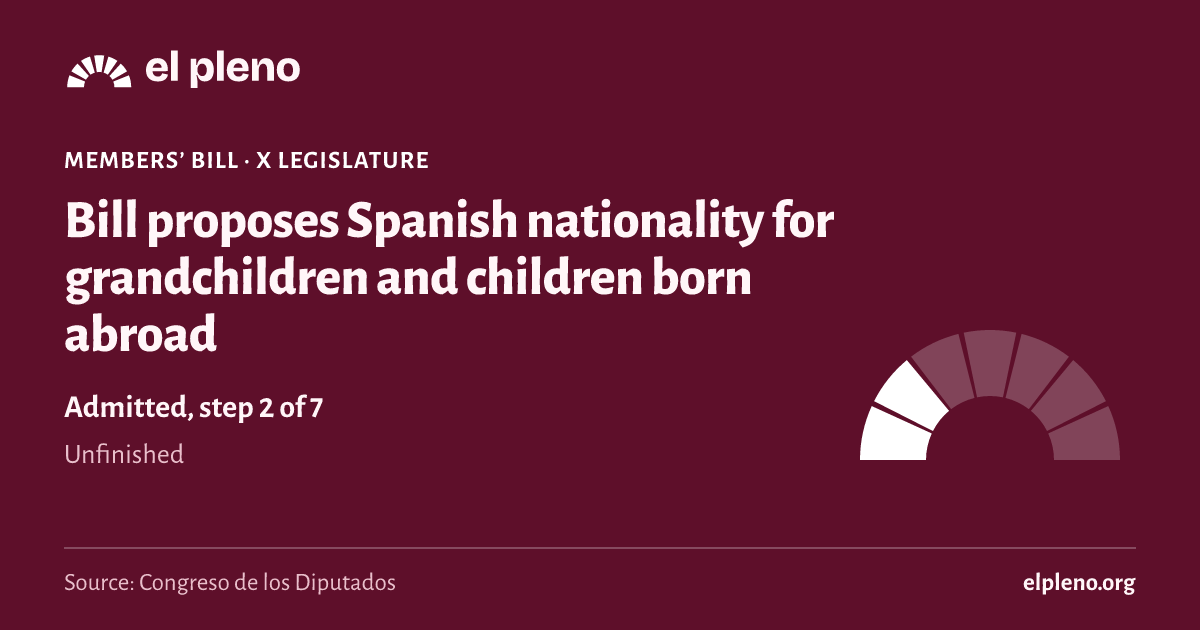
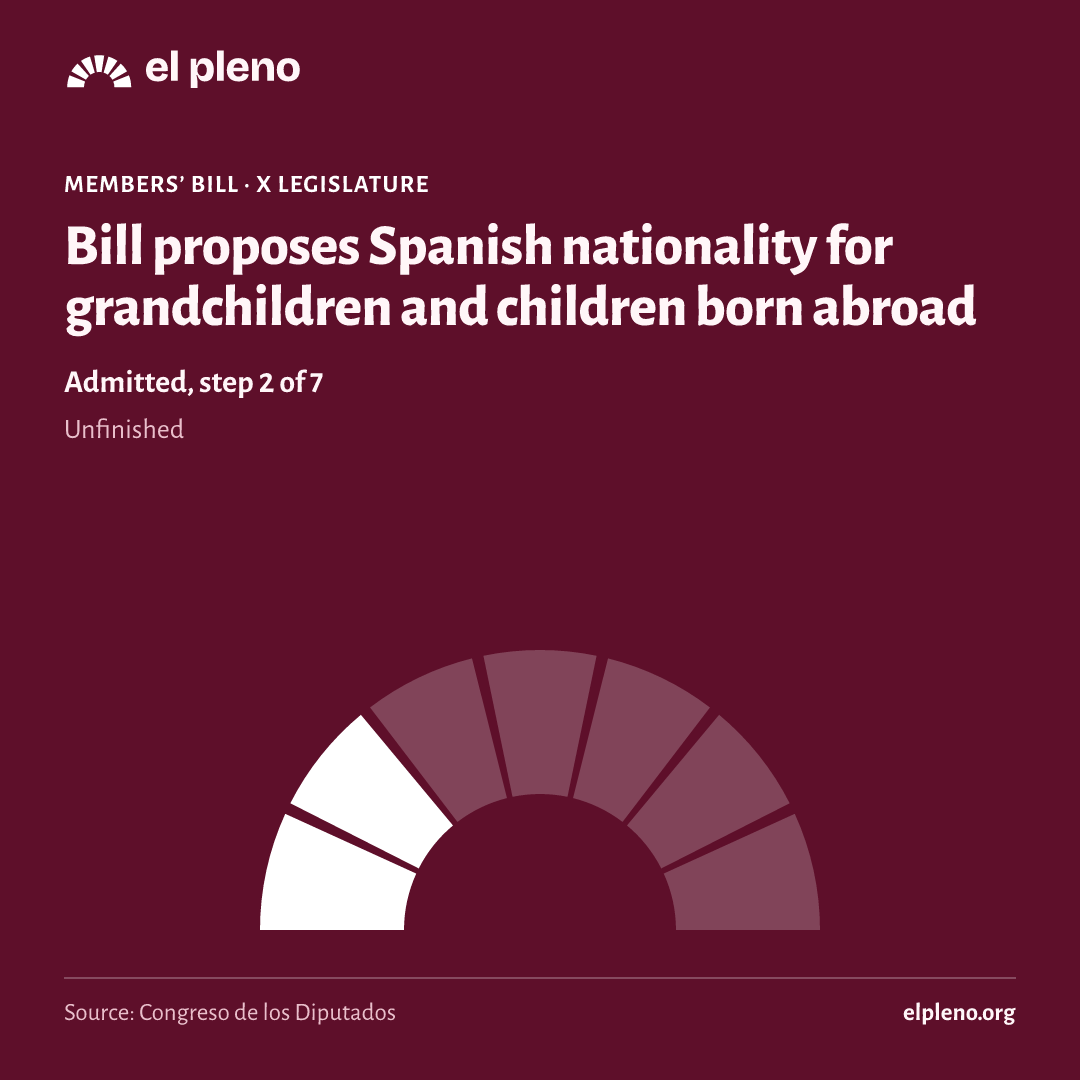
It took 2 of 7 steps. It reached Admitted, and today it is unfinished.
- Introduced14 July 2015Someone registers the text in the Congreso.
- Admitted22 July 2015The Bureau of the Congreso accepts it and, for a members’ bill, the plenary decides whether to consider it.
- Amendmentsnot reachedGroups propose changes.
- Committeenot reachedA committee goes through the text in detail.
- Plenarynot reachedAll 350 deputies vote.
- Senatenot reachedThe Senate can pass it, amend it or veto it.
- BOEnot reachedIt is published in the Official State Gazette (BOE) and comes into force.
See the 5 official steps on a timeline
Was there a plenary vote?
We have no plenary vote linked to this law in the Congreso’s data.
What happens next
What happens now?
The legislature ended before it finished. To go on, someone would have to introduce it again in the new Cortes.
It has not been presented again yet.
Sources
Where does all this come from?
- Congreso de los Diputados, file 122/000209
Official title, type, author, dates and stage.
Retrieved 11 November 2026
- The data comes from the open files of the Congreso, the Senate and the BOE, unaltered.
- Each deputy’s province is the one of their seat on the day of the vote.
- We only say “passed” or “rejected” when the majority needed is certain; otherwise we say which side had more votes.