What it is
Bill to publish lists of large tax debtors
It is a members’ bill. Introduced by parliamentary groups, the Senate, regional governments or citizens. It was introduced on 21 April 2015. Introduced by: Grupo Parlamentario de IU, ICV-EUiA, CHA: La Izquierda Plural.
Official title: Private member's bill amending the General Tax Law.
Source: Congreso de los Diputados, file 122/000202· updated 11 Nov
Automatic summary, not yet reviewed
- The bill starts from the idea that the tax system is insufficient and unfair, with widespread tax evasion and avoidance, and that the General Tax Law has gone more than 10 years without reform.
- The bill would require the tax administration to periodically publish lists of debtors to the tax authorities for unpaid tax debts or penalties, when the total owed exceeds €1,000,000 and payment deadlines have passed, and at least one year has passed for debts representing 25 % or more of the total. Deferred or suspended debts would not be included.
- The lists would include the full name and tax ID of individuals, or the company name and tax ID of corporations along with their directors' details, plus the total amount owed. If published electronically, the lists would stop being accessible three months later.
- The first list would be published the month after the law takes effect, and the law would enter into force the day after its publication in the Official State Gazette (Boletín Oficial del Estado).
Who it affects
- Individuals and companies owing more than €1,000,000 in tax debts or penalties.: They could appear on a public list with their identity and the amount owed.
- Directors and board members of debtor companies.: Their names and national ID numbers could be published along with the company's debt.
- The State Tax Administration Agency (Agencia Estatal de Administración Tributaria).: Its Director General would be responsible for approving the publications.
Words worth knowing
- Ley General Tributaria
- The basic Spanish law governing how taxes are managed and collected.
- Elusión fiscal
- Tax avoidance: using legal loopholes to pay less tax.
- Evasión fiscal
- Tax evasion: not paying taxes owed, which is illegal.
- NIF
- Tax identification number, the code identifying a person or company before the tax authorities.
- Deuda aduanera
- Customs debt: money owed in taxes related to importing and exporting goods.
It summarizes the text as it was introduced. It is written by artificial intelligence and may contain mistakes: the official text is what counts. Read the official text · How we make summaries
Where it stands
How far did it get?
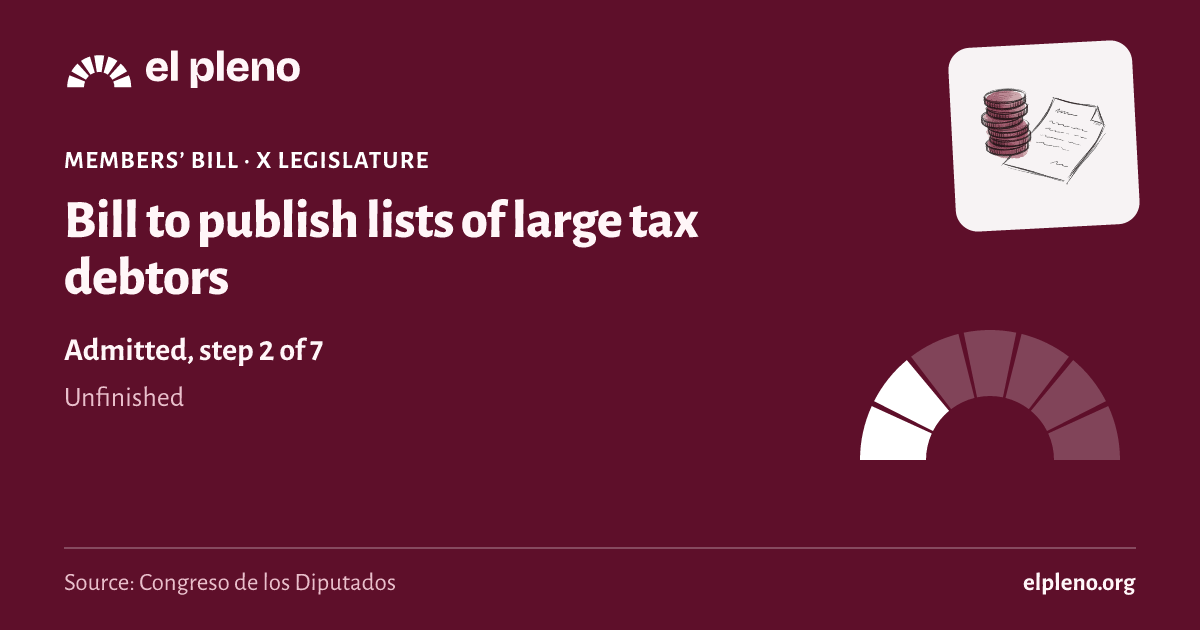
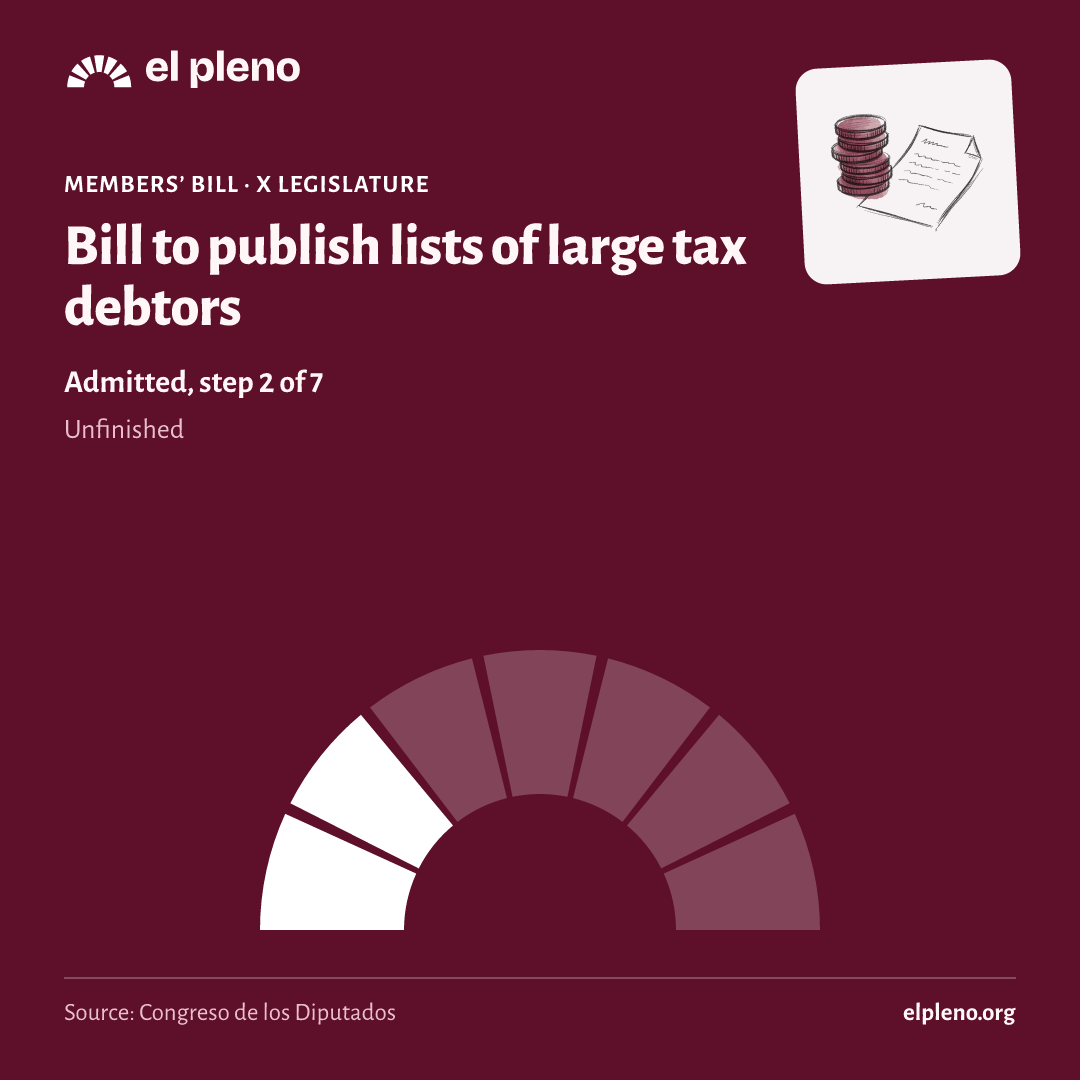
It took 2 of 7 steps. It reached Admitted, and today it is unfinished.
- Introduced21 April 2015Someone registers the text in the Congreso.
- Admitted28 April 2015The Bureau of the Congreso accepts it and, for a members’ bill, the plenary decides whether to consider it.
- Amendmentsnot reachedGroups propose changes.
- Committeenot reachedA committee goes through the text in detail.
- Plenarynot reachedAll 350 deputies vote.
- Senatenot reachedThe Senate can pass it, amend it or veto it.
- BOEnot reachedIt is published in the Official State Gazette (BOE) and comes into force.
See the 6 official steps on a timeline
Was there a plenary vote?
We have no plenary vote linked to this law in the Congreso’s data.
What happens next
What happens now?
The legislature ended before it finished. To go on, someone would have to introduce it again in the new Cortes.
It has not been presented again yet.
Sources
Where does all this come from?
- Congreso de los Diputados, file 122/000202
Official title, type, author, dates and stage.
Retrieved 11 November 2026
- The data comes from the open files of the Congreso, the Senate and the BOE, unaltered.
- Each deputy’s province is the one of their seat on the day of the vote.
- We only say “passed” or “rejected” when the majority needed is certain; otherwise we say which side had more votes.