What it is
Bill would give the Basque Country power over employment programs
It is a members’ bill. Introduced by parliamentary groups, the Senate, regional governments or citizens. It was introduced on 27 February 2015. Introduced by: Grupo Parlamentario Vasco (EAJ-PNV).
Official title: Private member's bill amending laws on labor matters regarding the competence of the Autonomous Community of the Basque Country.
Source: Congreso de los Diputados, file 122/000197· updated 11 Nov
Automatic summary, not yet reviewed
- The bill responds to the claim that the central State has been managing employment programs that belong to the Basque Country since the 2010 transfer, effective January 1, 2011. This would have caused disputes in the settlement of the quota exceeding 200 million euros.
- The bill would add a provision to the Employment Law so that the powers of the State Public Employment Service in the Basque Country are carried out by the Basque administration, under the transfer approved by Royal Decree 1441/2010 and the funding system of its Statute of Autonomy.
- It would also amend Law 43/2006 so that, in the Basque Country, Social Security contribution rebates linked to active employment policies are managed by the Basque administration.
- Finally, it would add provisions to three laws (the PREPARA plan, the Youth Guarantee System and the Employment Activation Program) so that the management and funding of their benefits in the Basque Country would fall to the Basque administration.
Who it affects
- Unemployed people in the Basque Country: Their benefits and employment programs would be managed by Basque institutions instead of the State Public Employment Service.
- Companies with workplaces in the Basque Country: Social Security and training contribution rebates would be managed by the Autonomous Community.
- Basque Government: It would receive the management and funding of the transferred employment functions.
- State Public Employment Service: It would stop managing the affected programs in the Basque Country, except for the transfer exceptions, such as paying unemployment benefits.
Words worth knowing
- Políticas activas de empleo (active employment policies)
- Measures to help people find work or improve their training, such as courses or hiring incentives.
- Traspaso de competencias (transfer of powers)
- Handover to an Autonomous Community of functions and resources previously managed by the State.
- Cupo (quota)
- The amount the Basque Country pays the State to fund the services the State keeps across the country, under the Economic Agreement.
- Concierto Económico (Economic Agreement)
- The system governing economic and tax relations between the State and the Basque Country.
- Bonificación de cuotas (contribution rebate)
- A discount on the amounts companies and workers pay to Social Security.
It summarizes the text as it was introduced. It is written by artificial intelligence and may contain mistakes: the official text is what counts. Read the official text · How we make summaries
Where it stands
How far did it get?
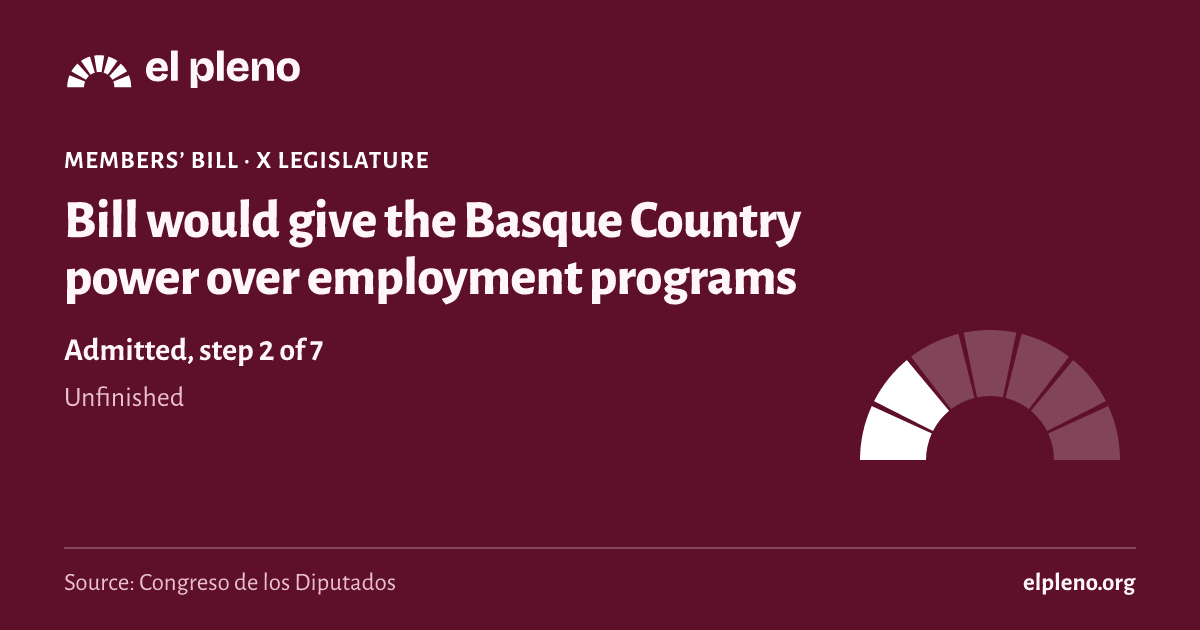
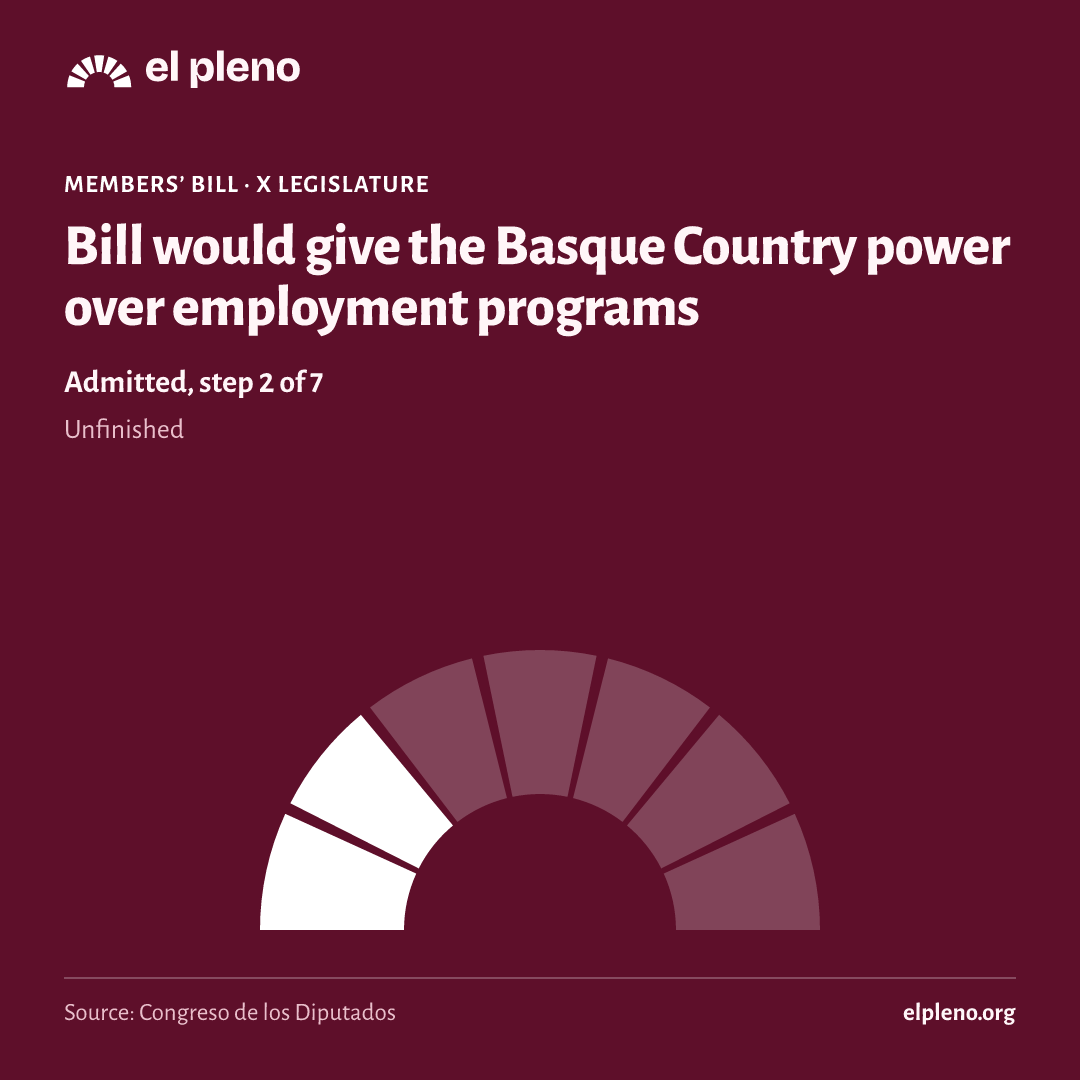
It took 2 of 7 steps. It reached Admitted, and today it is unfinished.
- Introduced27 February 2015Someone registers the text in the Congreso.
- Admitted3 March 2015The Bureau of the Congreso accepts it and, for a members’ bill, the plenary decides whether to consider it.
- Amendmentsnot reachedGroups propose changes.
- Committeenot reachedA committee goes through the text in detail.
- Plenarynot reachedAll 350 deputies vote.
- Senatenot reachedThe Senate can pass it, amend it or veto it.
- BOEnot reachedIt is published in the Official State Gazette (BOE) and comes into force.
See the 6 official steps on a timeline
Was there a plenary vote?
We have no plenary vote linked to this law in the Congreso’s data.
What happens next
What happens now?
The legislature ended before it finished. To go on, someone would have to introduce it again in the new Cortes.
It has not been presented again yet.
Sources
Where does all this come from?
- Congreso de los Diputados, file 122/000197
Official title, type, author, dates and stage.
Retrieved 11 November 2026
- The data comes from the open files of the Congreso, the Senate and the BOE, unaltered.
- Each deputy’s province is the one of their seat on the day of the vote.
- We only say “passed” or “rejected” when the majority needed is certain; otherwise we say which side had more votes.