What it is
Bill to give civil use to historic or natural military buildings
It is a members’ bill. Introduced by parliamentary groups, the Senate, regional governments or citizens. It was introduced on 3 February 2014. Introduced by: Grupo Parlamentario Mixto.
Official title: Private member's bill regarding the recovery for civil use of assets of the Defense heritage of historical, artistic or environmental interest.
Source: Congreso de los Diputados, file 122/000144· updated 11 Nov
Automatic summary, not yet reviewed
- The bill would require Defense to remove from military use, within five years, its buildings with historic or artistic value and those located in protected natural areas.
- These assets would remain public and be transferred to the Ministry of Economy and Treasury. Local governments and autonomous communities could request them by submitting a plan for protection, conservation, restoration and uses.
- The transfer of these assets would be free of charge: Defense would receive no income or compensation for them.
- The bill would amend Law 50/1998 so that any local entity can request a declaration that a military building is no longer needed, and so that assets no one requests go back to the Defense agency for sale.
Who it affects
- Ministry of Defense: Would have to remove its historic or environmentally valuable buildings from military use within five years.
- Ministry of Economy and Treasury: Would receive the removed assets and decide who gets them.
- Local governments and autonomous communities: Could request the assets by submitting a plan for protection, conservation, restoration and uses.
- Institute for Housing, Infrastructure and Equipment for Defense: Would manage the sale of assets no one requests.
Words worth knowing
- Desafectar (removal from designated use)
- Taking a public asset out of the service or use it was assigned to, such as military use.
- Bien de interés cultural (asset of cultural interest)
- Legal status that protects goods with outstanding historic or artistic value.
- Cesión (transfer)
- Handing over an asset to another public administration for its use, without selling it.
- Enajenación (sale of public assets)
- The sale of a public asset.
It summarizes the text as it was introduced. It is written by artificial intelligence and may contain mistakes: the official text is what counts. Read the official text · How we make summaries
Where it stands
How far did it get?
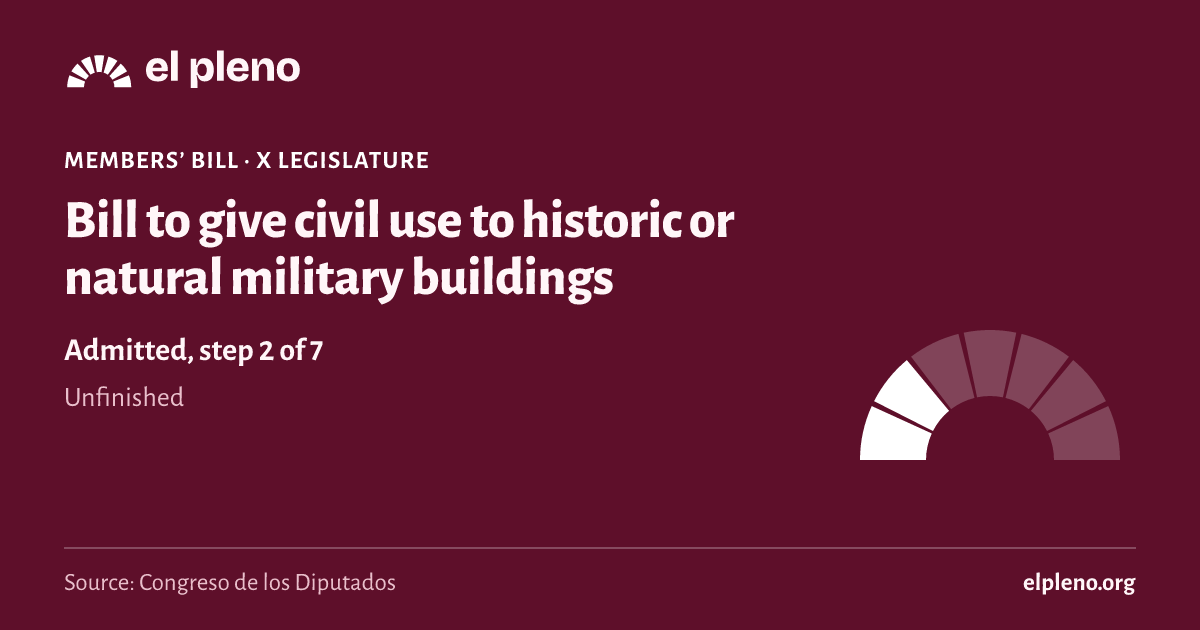
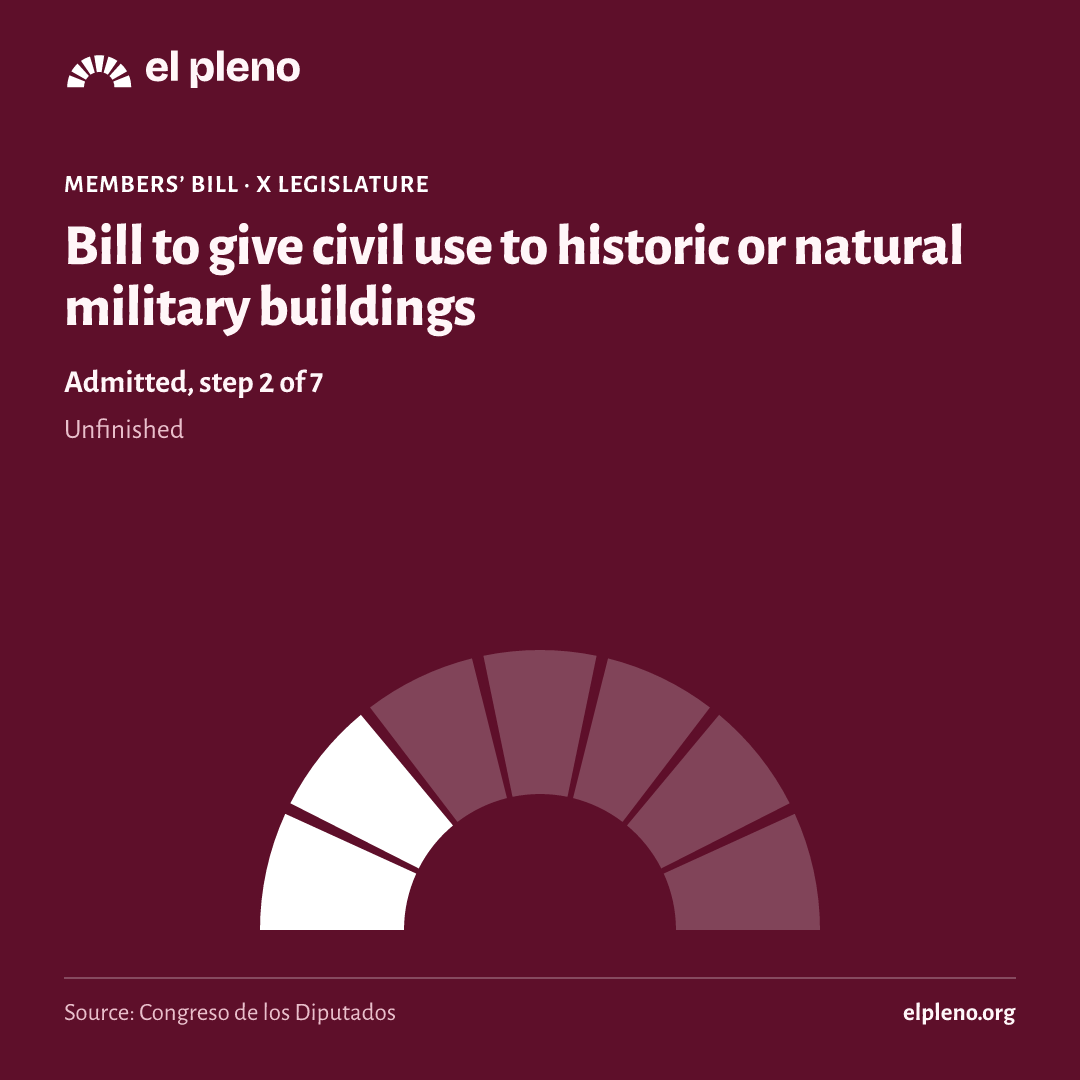
It took 2 of 7 steps. It reached Admitted, and today it is unfinished.
- Introduced3 February 2014Someone registers the text in the Congreso.
- Admitted11 February 2014The Bureau of the Congreso accepts it and, for a members’ bill, the plenary decides whether to consider it.
- Amendmentsnot reachedGroups propose changes.
- Committeenot reachedA committee goes through the text in detail.
- Plenarynot reachedAll 350 deputies vote.
- Senatenot reachedThe Senate can pass it, amend it or veto it.
- BOEnot reachedIt is published in the Official State Gazette (BOE) and comes into force.
See the 6 official steps on a timeline
Was there a plenary vote?
We have no plenary vote linked to this law in the Congreso’s data.
What happens next
What happens now?
The legislature ended before it finished. To go on, someone would have to introduce it again in the new Cortes.
It has not been presented again yet.
Sources
Where does all this come from?
- Congreso de los Diputados, file 122/000144
Official title, type, author, dates and stage.
Retrieved 11 November 2026
- The data comes from the open files of the Congreso, the Senate and the BOE, unaltered.
- Each deputy’s province is the one of their seat on the day of the vote.
- We only say “passed” or “rejected” when the majority needed is certain; otherwise we say which side had more votes.