What it is
Bill to automatically remove car ownership blocks once the debt is paid
It is a members’ bill. Introduced by parliamentary groups, the Senate, regional governments or citizens. It was introduced on 4 April 2012. Introduced by: Grupo Parlamentario Socialista.
Official title: Private member's bill regarding the cancellation of disposition limitations in the Vehicle Registry.
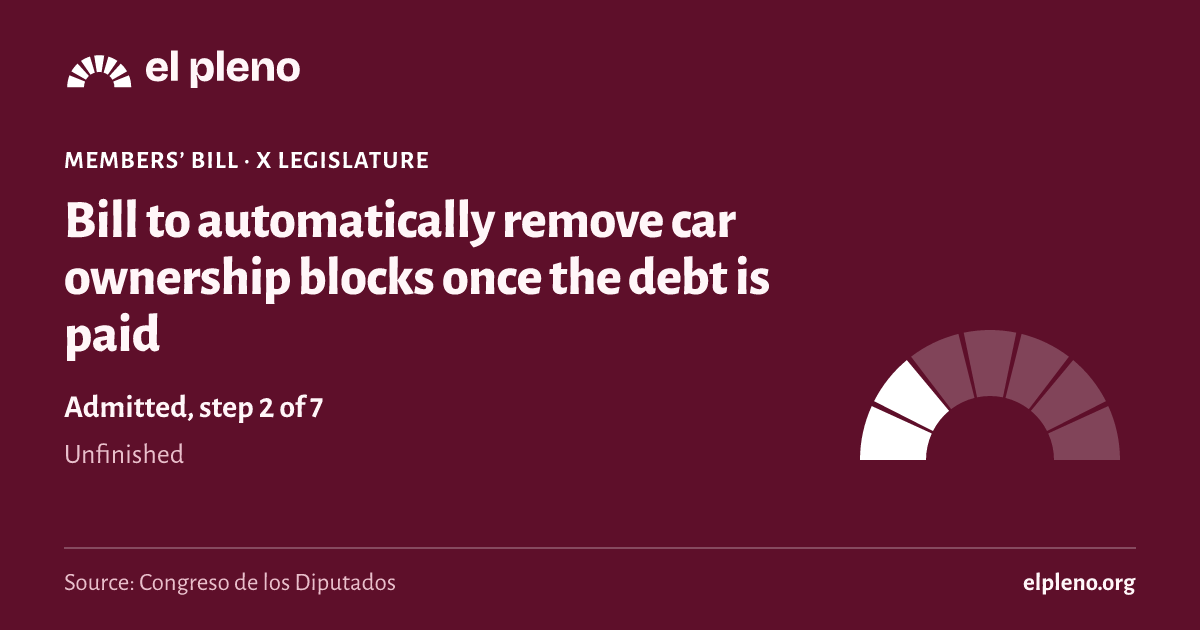
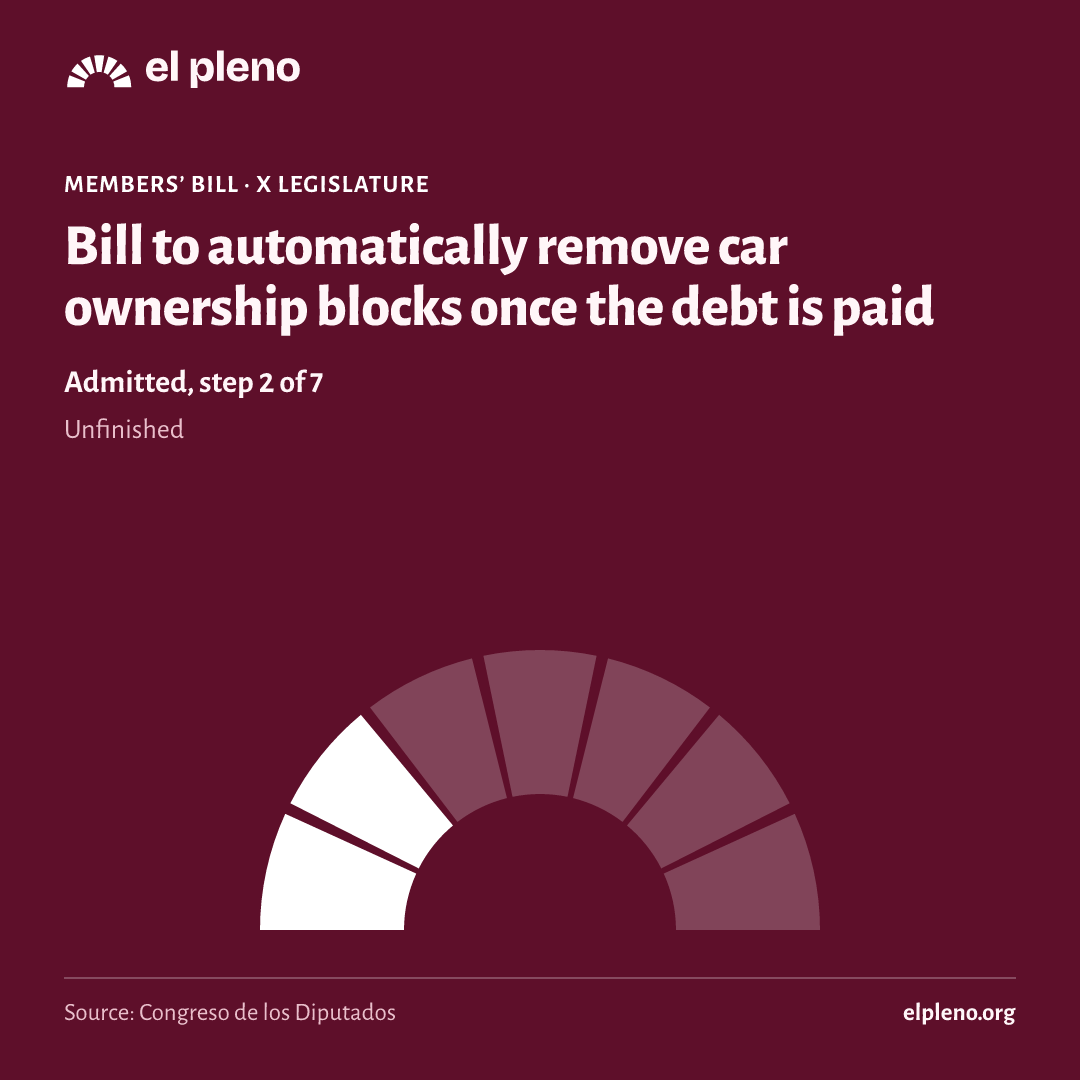
Source: Congreso de los Diputados, file 122/000055· updated 11 Nov
Automatic summary, not yet reviewed
- The bill would require credit institutions that asked to record a limitation on a vehicle (from an installment sale or a loan) to request its cancellation on their own initiative in the corresponding registry within 60 days of full payment.
- The same duty would apply to the financial lessor when the customer has paid all installments and exercised the purchase option, but only for contracts signed after the rule takes effect.
- The reason given is that recording these charges can now be done online simultaneously, but cancellation cannot, which delays changing the vehicle's registered owner.
- The law would take effect 30 days after its publication in the Boletín Oficial del Estado (official state gazette).
Who it affects
- Credit institutions that requested recording limitations on vehicles: They would have to request cancellation of the registry entry within 60 days of full payment.
- Financial lessors (leasing companies): They would have to cancel the entry when the customer pays all installments and buys the vehicle, if the contract is signed after the rule takes effect.
- People buying a car in installments, with financing, or through leasing: They could change the vehicle's registered ownership without delays once payment is complete.
Words worth knowing
- Limitación de disposición
- A registry entry that prevents freely selling or transferring the vehicle while a debt exists, such as a reservation of title or a lease.
- Reserva de dominio
- The seller remains the owner of the vehicle until the buyer pays the full price.
- Arrendador financiero (leasing)
- A company that leases the vehicle with an option to buy it at the end of the contract.
- De oficio
- On the entity's own initiative, without the affected person having to request it.
- Registro de Vehículos
- The registry of the Directorate General for Traffic where incidents affecting each vehicle are recorded.
It summarizes the text as it was introduced. It is written by artificial intelligence and may contain mistakes: the official text is what counts. Read the official text · How we make summaries
Where it stands
How far did it get?
It took 2 of 7 steps. It reached Admitted, and today it is unfinished.
- Introduced4 April 2012Someone registers the text in the Congreso.
- Admitted10 April 2012The Bureau of the Congreso accepts it and, for a members’ bill, the plenary decides whether to consider it.
- Amendmentsnot reachedGroups propose changes.
- Committeenot reachedA committee goes through the text in detail.
- Plenarynot reachedAll 350 deputies vote.
- Senatenot reachedThe Senate can pass it, amend it or veto it.
- BOEnot reachedIt is published in the Official State Gazette (BOE) and comes into force.
See the 6 official steps on a timeline
Was there a plenary vote?
We have no plenary vote linked to this law in the Congreso’s data.
What happens next
What happens now?
The legislature ended before it finished. To go on, someone would have to introduce it again in the new Cortes.
It has not been presented again yet.
Sources
Where does all this come from?
- Congreso de los Diputados, file 122/000055
Official title, type, author, dates and stage.
Retrieved 11 November 2026
- The data comes from the open files of the Congreso, the Senate and the BOE, unaltered.
- Each deputy’s province is the one of their seat on the day of the vote.
- We only say “passed” or “rejected” when the majority needed is certain; otherwise we say which side had more votes.