What it is
Bill to give teachers the status of public authority
It is a members’ bill. Introduced by parliamentary groups, the Senate, regional governments or citizens. It was introduced on 24 February 2012. Introduced by: Grupo Parlamentario de Unión Progreso y Democracia.
Official title: Organic private member's bill to recognize the teacher as an authority in the exercise of the public educational function.
Source: Congreso de los Diputados, file 122/000051· updated 11 Nov
Automatic summary, not yet reviewed
- The bill would give teachers at public and private schools, whether state-funded or not, the status of public authority when they carry out their teaching duties. This would give them legal protection against aggression and misbehavior by students, parents or guardians.
- The bill would let teachers directly impose disciplinary measures on students for minor matters and take precautionary measures for serious ones, when the facts disrupt or hinder teaching.
- The school principal would still handle serious matters, but would be informed of the measures teachers impose, to check that they follow the rules. The bill would amend Article 132 of the Education Act and Article 54 of the Right to Education Act.
- A new right would be added for parents and guardians: to be informed of the disciplinary measures imposed on their children or wards.
Who it affects
- Teachers at non-university public and private schools: They would have the status of authority and could impose minor disciplinary measures and precautionary measures in serious cases.
- School principals: They would keep disciplinary powers in serious matters and be informed of measures imposed by teachers.
- Parents and guardians: They would have the right to be informed of disciplinary measures imposed on their children or wards.
- Students: They could receive minor disciplinary or precautionary measures from teachers when they disrupt class.
Words worth knowing
- Proposición de ley
- A bill introduced by a parliamentary group. It is not yet an approved law.
- Ley Orgánica
- Organic law: a type of Spanish law reserved for major matters such as fundamental rights. It needs a higher majority to pass.
- Medidas cautelares
- Urgent, temporary measures taken while a serious problem is being resolved.
- Centro concertado
- A private school that receives public funding and follows the same admission system as public schools.
- Artículo primero / Artículo segundo
- Spanish labels for the articles of the bill that would amend existing laws.
It summarizes the text as it was introduced. It is written by artificial intelligence and may contain mistakes: the official text is what counts. Read the official text · How we make summaries
Where it stands
How far did it get?
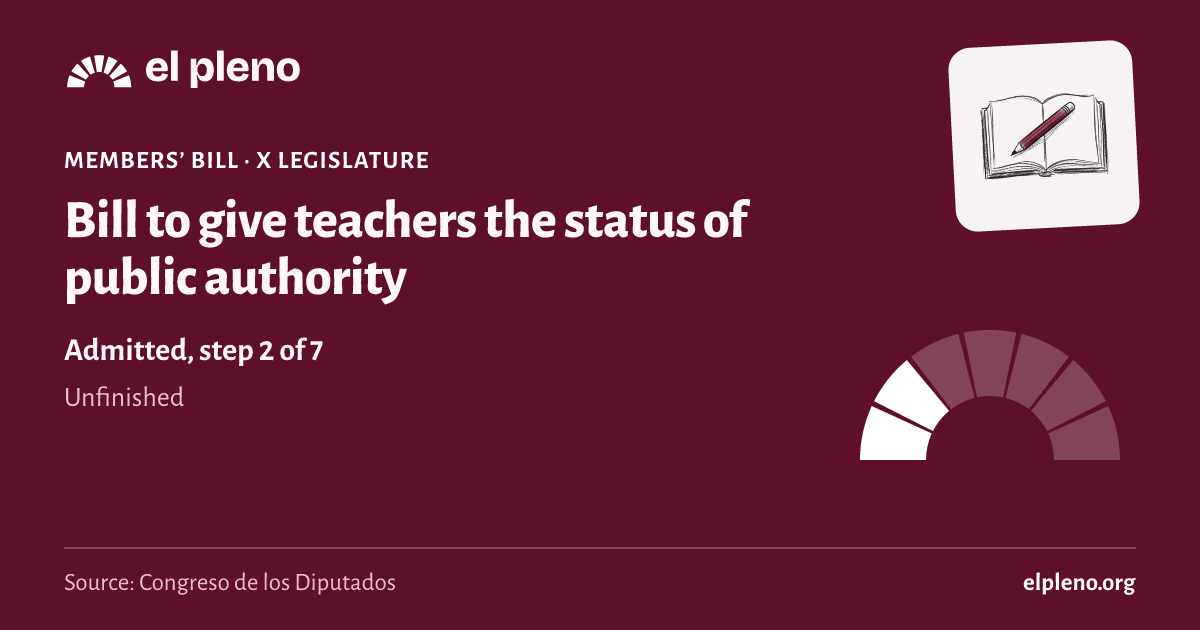
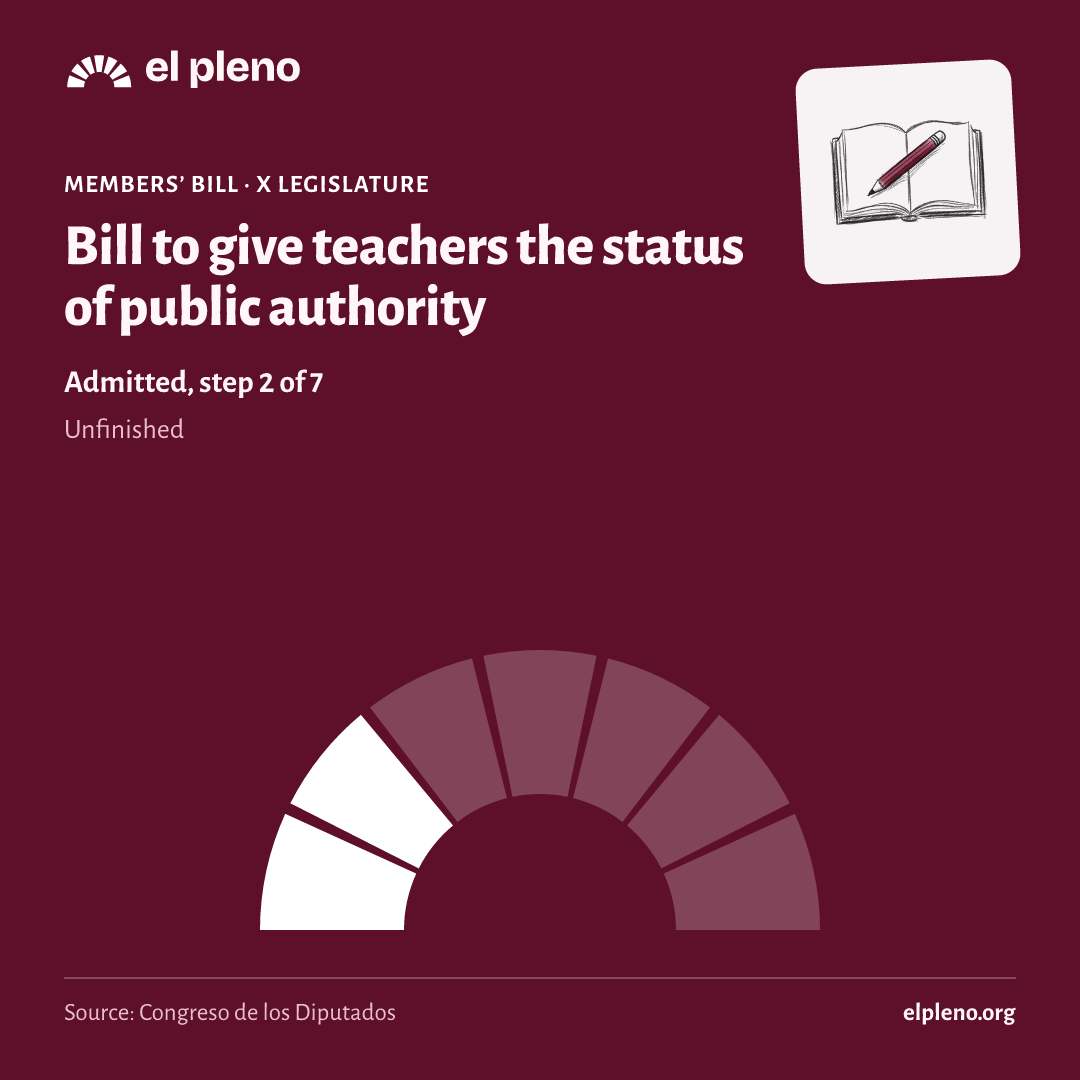
It took 2 of 7 steps. It reached Admitted, and today it is unfinished.
- Introduced24 February 2012Someone registers the text in the Congreso.
- Admitted28 February 2012The Bureau of the Congreso accepts it and, for a members’ bill, the plenary decides whether to consider it.
- Amendmentsnot reachedGroups propose changes.
- Committeenot reachedA committee goes through the text in detail.
- Plenarynot reachedAll 350 deputies vote.
- Senatenot reachedThe Senate can pass it, amend it or veto it.
- BOEnot reachedIt is published in the Official State Gazette (BOE) and comes into force.
See the 6 official steps on a timeline
Was there a plenary vote?
We have no plenary vote linked to this law in the Congreso’s data.
What happens next
What happens now?
The legislature ended before it finished. To go on, someone would have to introduce it again in the new Cortes.
It has not been presented again yet.
Sources
Where does all this come from?
- Congreso de los Diputados, file 122/000051
Official title, type, author, dates and stage.
Retrieved 11 November 2026
- The data comes from the open files of the Congreso, the Senate and the BOE, unaltered.
- Each deputy’s province is the one of their seat on the day of the vote.
- We only say “passed” or “rejected” when the majority needed is certain; otherwise we say which side had more votes.