What it is
Clear rules for contracts between suppliers and distributors
It is a members’ bill. Introduced by parliamentary groups, the Senate, regional governments or citizens. It was introduced on 13 December 2011. Introduced by: Grupo Parlamentario Socialista.
Official title: Private member's bill on Distribution Contracts.
Source: Congreso de los Diputados, file 122/000008· updated 11 Nov
Automatic summary, not yet reviewed
- The bill defines distribution contracts: agreements in which a distributor commits, on a continuous basis and as an independent business, to selling a supplier's products or services. It also lists, for information only, the most common types, such as exclusive purchase, selective distribution or franchising.
- Agency contracts, contracts involving end consumers, water, electricity or gas supply contracts, medicine contracts and other areas with their own rules would be excluded from the law.
- Contracts would be governed by freedom of agreement, cooperation, equal treatment and good faith. Public authorities would promote sector codes of conduct, and the parties could use mediation and arbitration to resolve disputes.
- Before signing, the parties would have to exchange in writing the information needed to decide with full knowledge, and they would owe each other confidentiality. Contracts and their changes would have to be put in writing.
- During the contract, the bill regulates information duties, commercial targets, minimum purchases, territorial exclusivity, Internet sales, warranties, advertising and discounts. The supplier could not stop the distributor selling online, except for public health or consumer safety reasons.
- To end an open-ended contract, written notice of one month per year of contract, up to six months, would be required. If terminated without just cause, compensation would cover unamortized specific investments and, exceptionally, the customer base, capped at the distributor's average annual sales over the last five years.
Who it affects
- Suppliers and distributors (wholesalers and retailers): They would get clear rules on information, content, duration and termination of their contracts.
- Franchisors and franchisees: They would have to register in the Franchisors Registry and provide written information before signing.
- Multilevel selling companies: Minimum purchases without a buyback clause and abusive entry fees would be banned.
- Organizers of private markets and online auctions: They would have to guarantee transparency, free access and non-discrimination.
Words worth knowing
- Distribuidor (distributor)
- A business that continuously sells a supplier's products or services, bearing the risk of its own business.
- Franquicia (franchise)
- A contract by which one company grants another the right to use its system for selling products or services.
- Rappel (rebate)
- A discount or partial refund applied to the price based on purchases made.
- Tácita reconducción (tacit renewal)
- When an expired contract keeps being performed and is deemed extended.
It summarizes the text as it was introduced. It is written by artificial intelligence and may contain mistakes: the official text is what counts. Read the official text · How we make summaries
Where it stands
How far did it get?
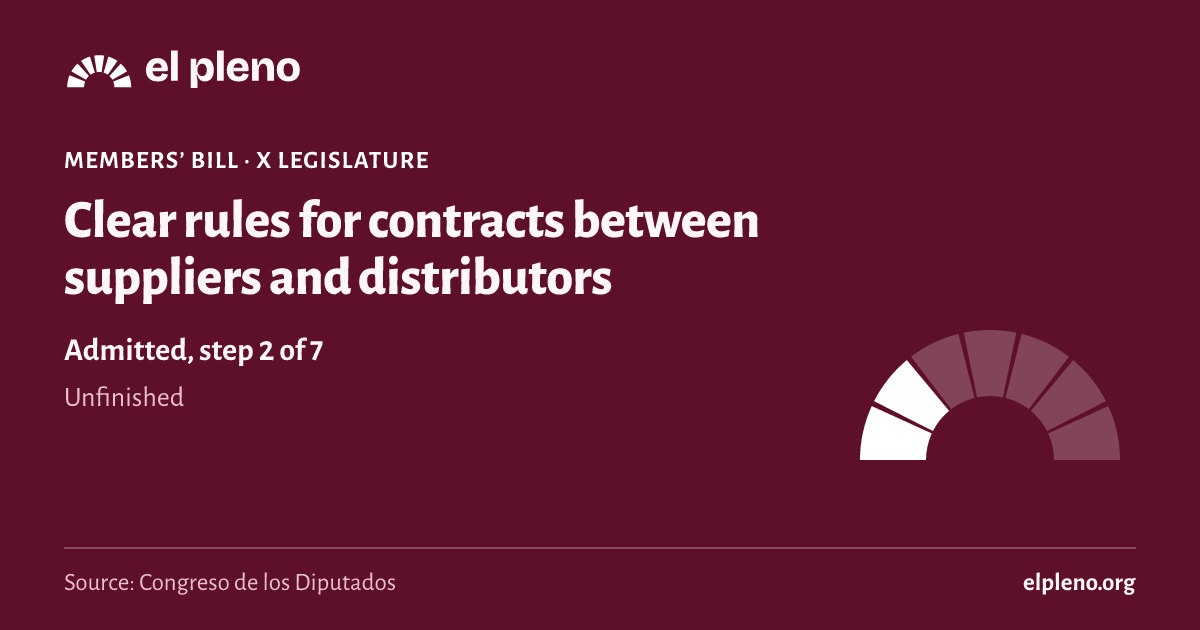
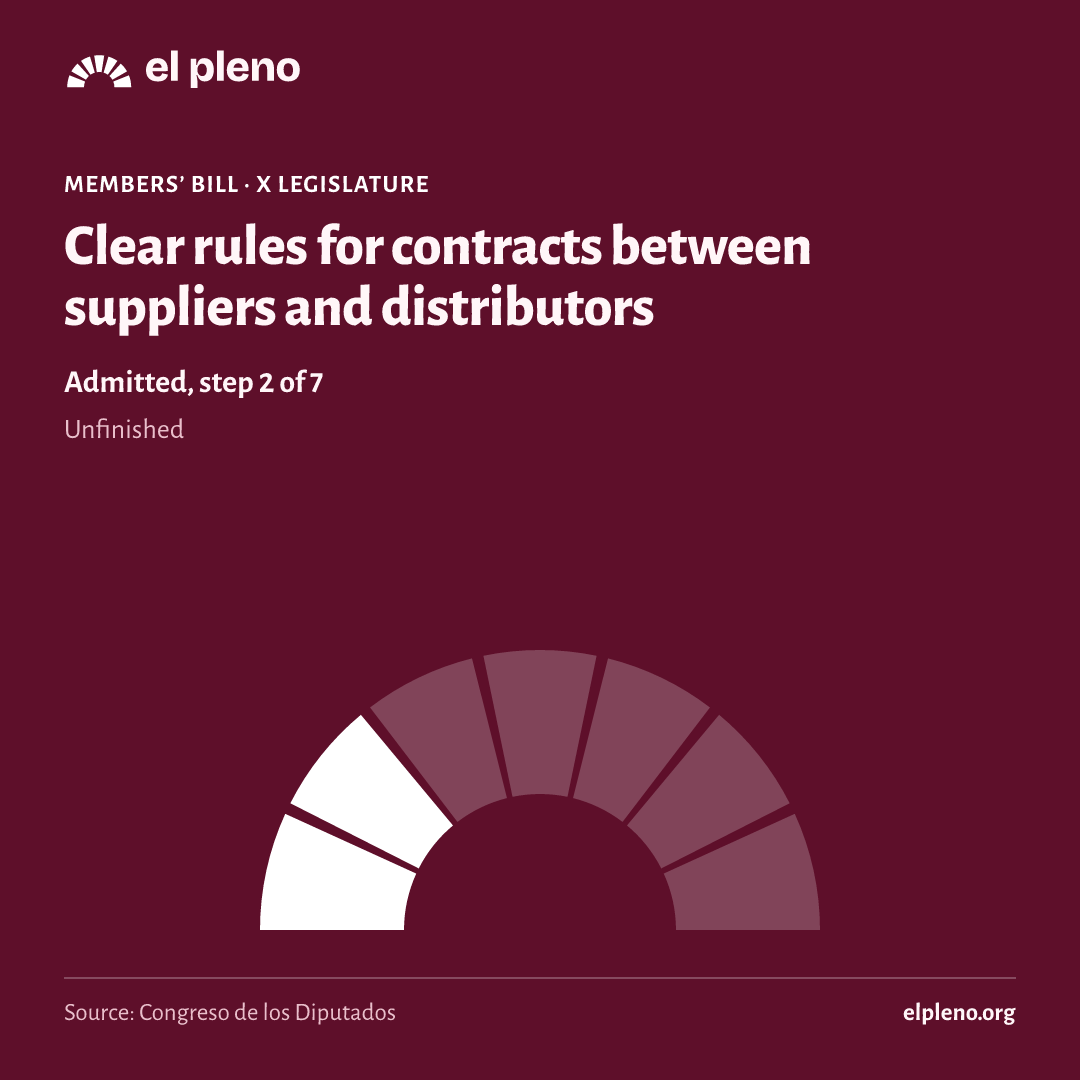
It took 2 of 7 steps. It reached Admitted, and today it is unfinished.
- Introduced13 December 2011Someone registers the text in the Congreso.
- Admitted21 December 2011The Bureau of the Congreso accepts it and, for a members’ bill, the plenary decides whether to consider it.
- Amendmentsnot reachedGroups propose changes.
- Committeenot reachedA committee goes through the text in detail.
- Plenarynot reachedAll 350 deputies vote.
- Senatenot reachedThe Senate can pass it, amend it or veto it.
- BOEnot reachedIt is published in the Official State Gazette (BOE) and comes into force.
See the 6 official steps on a timeline
Was there a plenary vote?
We have no plenary vote linked to this law in the Congreso’s data.
What happens next
What happens now?
The legislature ended before it finished. To go on, someone would have to introduce it again in the new Cortes.
It has not been presented again yet.
Sources
Where does all this come from?
- Congreso de los Diputados, file 122/000008
Official title, type, author, dates and stage.
Retrieved 11 November 2026
- The data comes from the open files of the Congreso, the Senate and the BOE, unaltered.
- Each deputy’s province is the one of their seat on the day of the vote.
- We only say “passed” or “rejected” when the majority needed is certain; otherwise we say which side had more votes.